 Angielski (ENG)
  Polski (PL)
From an old film
Wiesław Smyk is a collector of historical photography and an amateur photographer. We always work with him during the implementation of our local and international initiatives focused on 'living history lessons' and intergenerational dialogue. The 'living history lessons' video materials we create are always enriched with many historical photographs from the collection of Wiesław Smyk. We also use the knowledge of our expert when we need historical refinement of seniors' stories, especially when it comes to the location of the story's action. Today we will talk with him about where his passion comes from and what the daily activities of an old photography seeker look like.
Heureka Generator: Thank you for agreeing to tell us about your passion and to introduce a little closer to the old Zamość. When did you start collecting old photos? Was it because of an interest in history, or maybe in photography?
Wiesław Smyk: Often such interests arise by accident. And so it was with me. In 2010, a friend of mine, who left Zamość quite a long time ago, asked me for some old photos of the city, preferably from the 1960s and 1970s. I searched the internet and found the 'fotopolska.eu' website specializing in documenting Polish architecture - both contemporary and historical, which is already disappearing from the landscape of our cities. I was surprised to find that Zamość was 'represented' by only a few dozen photographs. Then I decided that something had to be done. And that's how it all started.
HG: Where should you start searching if you want to find such photos? Is it a difficult task?
WS: Not having any experience or knowledge on this subject, I started with the simplest activity, ie I searched 'old photos of Zamość' in Google. However, this 'resource' ran out fairly quickly and it was necessary to delve deeper. In the case of old, historical photos of Zamość, I found that the most complete documentation was made by the Austrians during the World War I. So I checked the Austrian archives online, including the Österreichischen Nationalbibliothek and the Österreichische Staatsarchiv.
Is it a difficult task? No, but it requires patience multiplied by ten. Austrian archives have very rich collections. Their drawback, however, is the lack of descriptions or incorrect descriptions. There is also a problem with the spelling of the names of Polish towns. For example, Zamość is referred to as: Zamosc, Zamosz, Zamosch, Zamoscie, Zamoch, Zamojsce, Zamosce, Zamoscz. This is where that most important trait of a seeker comes in, which is patience. In the case of one of the undefined photo folders, which had about 35 thousand photos, I had to go through them all, photo by photo - select, enlarge, close. It took me about 4 months. The effect, however, was worth the work. I discovered 11 photos of Zamość from the period 1912-1920, so far unknown to anyone, especially Zamość archivists and historians. Currently, I am beginning to recognize the possibilities of obtaining photos from Russian archives. I think there are great opportunities here, especially since Russian-language sites with online collections have started to appear recently.
Wiesław Smyk: Often such interests arise by accident. And so it was with me. In 2010, a friend of mine, who left Zamość quite a long time ago, asked me for some old photos of the city, preferably from the 1960s and 1970s. I searched the internet and found the 'fotopolska.eu' website specializing in documenting Polish architecture - both contemporary and historical, which is already disappearing from the landscape of our cities. I was surprised to find that Zamość was 'represented' by only a few dozen photographs. Then I decided that something had to be done. And that's how it all started.
HG: Where should you start searching if you want to find such photos? Is it a difficult task?
WS: Not having any experience or knowledge on this subject, I started with the simplest activity, ie I searched 'old photos of Zamość' in Google. However, this 'resource' ran out fairly quickly and it was necessary to delve deeper. In the case of old, historical photos of Zamość, I found that the most complete documentation was made by the Austrians during the World War I. So I checked the Austrian archives online, including the Österreichischen Nationalbibliothek and the Österreichische Staatsarchiv.
Is it a difficult task? No, but it requires patience multiplied by ten. Austrian archives have very rich collections. Their drawback, however, is the lack of descriptions or incorrect descriptions. There is also a problem with the spelling of the names of Polish towns. For example, Zamość is referred to as: Zamosc, Zamosz, Zamosch, Zamoscie, Zamoch, Zamojsce, Zamosce, Zamoscz. This is where that most important trait of a seeker comes in, which is patience. In the case of one of the undefined photo folders, which had about 35 thousand photos, I had to go through them all, photo by photo - select, enlarge, close. It took me about 4 months. The effect, however, was worth the work. I discovered 11 photos of Zamość from the period 1912-1920, so far unknown to anyone, especially Zamość archivists and historians. Currently, I am beginning to recognize the possibilities of obtaining photos from Russian archives. I think there are great opportunities here, especially since Russian-language sites with online collections have started to appear recently.
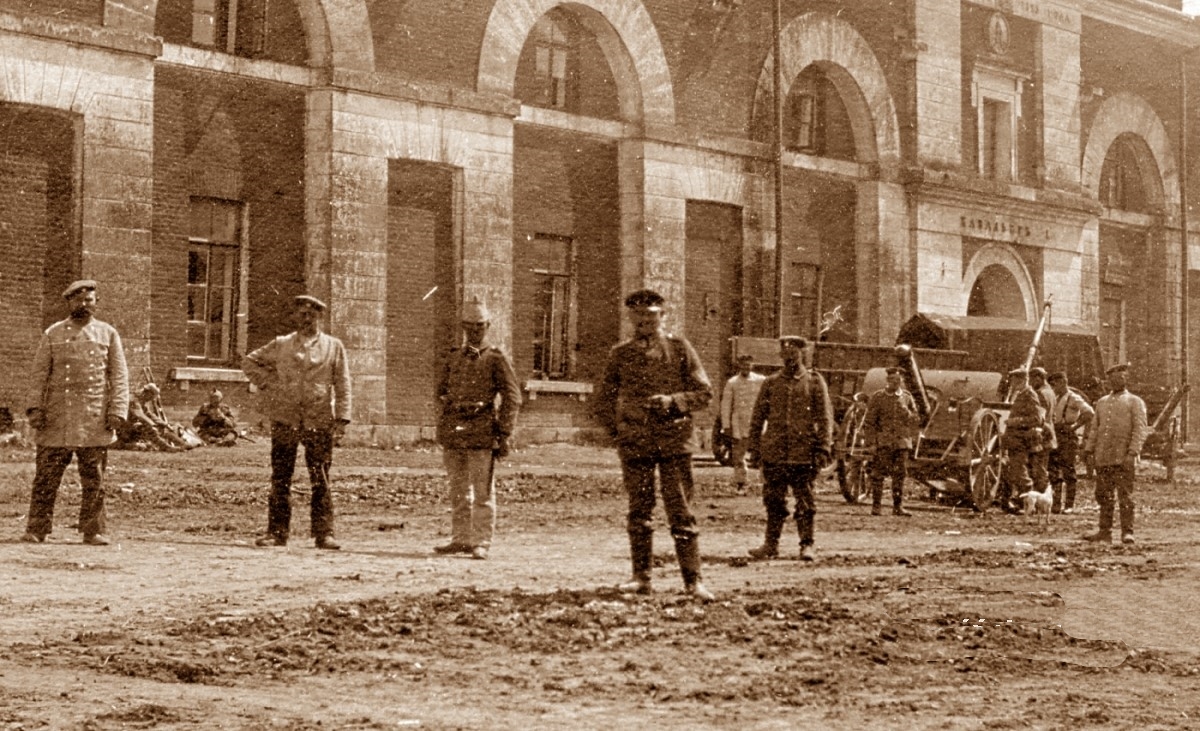


HG: How do you know that the photography really shows Zamość? The old town itself may be easy to recognize, but what about the rest of the city? Is there a lot of mistakes in determining the place that has been captured in the photo?
WS: Indeed, the Zamość Old Town is quite obvious in recognition, but Zamość outside the fortress walls is often a mystery, even for the greatest experts on the subject. This is especially true of objects that no longer exist. However, if someone has hundreds or even thousands of old photos in their head - such identification is possible. In the case of this closer history, i.e. the period of the World War II and the post-war period, one of my most interesting discoveries turned out to be very helpful - an aerial photo of Zamość from August 1944, found at the National Archives at College Park in the United States. The high resolution of the photo scan (21000x21000pix) allows the identification of the historical buildings of the city. The head of the Zamość archive stated that this photograph was a job for him for the next few years, and that on this basis it would be possible to publish some serious scientific works.
WS: Indeed, the Zamość Old Town is quite obvious in recognition, but Zamość outside the fortress walls is often a mystery, even for the greatest experts on the subject. This is especially true of objects that no longer exist. However, if someone has hundreds or even thousands of old photos in their head - such identification is possible. In the case of this closer history, i.e. the period of the World War II and the post-war period, one of my most interesting discoveries turned out to be very helpful - an aerial photo of Zamość from August 1944, found at the National Archives at College Park in the United States. The high resolution of the photo scan (21000x21000pix) allows the identification of the historical buildings of the city. The head of the Zamość archive stated that this photograph was a job for him for the next few years, and that on this basis it would be possible to publish some serious scientific works.

I must add that the followers of my fan page Zamość drewniany i zamojskie archiwalia (Wooden Zamość and Zamość archives) are very helpful in identifying the photos. When I have doubts about the location or time of the photography, I refer to their memory and knowledge. Among the followers of this site are the former director of the Zamość archive and the creator of 'Zamościopedia', Mr. Andrzej Kędziora, as well as the current head of the archive, Dr. Jakub Żygawski, and of course other collectors and lovers of old photographs of Zamość. One of the most interesting puzzles I managed to solve thanks to the help of Mr. Żygawski. The photo showed a large square with chickens, in the background a windmill, a chimney - probably a brickyard, some thickets with trees and some uneven ground. It was known that it was Zamość, but where? I sent the photo to Mr. Żygawski, who, after analyzing the details, recognized the Orthodox cemetery functioning until today at Wyszyńskiego street.

HG: Once we search for a given photo and want to have it in our collection, should we be prepared for high costs? What influences the value of a given photo?
WS: The purchase of original photos is quite limited. Only auction portals, flea markets or exchanges with other collectors are possible. Shopping on auction portals is often a matter of chance. The photos of Zamość town hall constitute almost 70% of all photos at auctions. Their price is low and everyone can buy them for 2-3 euros. The price increases if the quality is good and the photo also shows some interesting so-called 'street scenes' or military vehicles. Photographs about the Holocaust are a separate matter. This is where Yad Vashem, the Institute for the Remembrance of the Martyrs and Heroes of the Holocaust usually comes in, and then the purchase of such a photograph, due to the amounts at stake, is rather out of the question. The price range for photos, both from the World War II and earlier, ranges from a dozen or so to 900 zlotys. Although there were auctions where one photo reached the price of 1890 zlotys.
WS: The purchase of original photos is quite limited. Only auction portals, flea markets or exchanges with other collectors are possible. Shopping on auction portals is often a matter of chance. The photos of Zamość town hall constitute almost 70% of all photos at auctions. Their price is low and everyone can buy them for 2-3 euros. The price increases if the quality is good and the photo also shows some interesting so-called 'street scenes' or military vehicles. Photographs about the Holocaust are a separate matter. This is where Yad Vashem, the Institute for the Remembrance of the Martyrs and Heroes of the Holocaust usually comes in, and then the purchase of such a photograph, due to the amounts at stake, is rather out of the question. The price range for photos, both from the World War II and earlier, ranges from a dozen or so to 900 zlotys. Although there were auctions where one photo reached the price of 1890 zlotys.

HG: What period do you have the most photos from?
WS: Most photos appearing on auction portals are photos from the World War II period, but there are also quite a lot of photos from the beginning of the 20th century. I have the most photos from these two periods. Unfortunately, there are no photographs of Zamość from the 19th century. The oldest known photographs are those of Strzelecki from around 1874. This is a bit surprising, because Zamość has always been an important city from military and commercial point of view. Perhaps the discovery of the oldest photos of Zamość is still ahead of us.
WS: Most photos appearing on auction portals are photos from the World War II period, but there are also quite a lot of photos from the beginning of the 20th century. I have the most photos from these two periods. Unfortunately, there are no photographs of Zamość from the 19th century. The oldest known photographs are those of Strzelecki from around 1874. This is a bit surprising, because Zamość has always been an important city from military and commercial point of view. Perhaps the discovery of the oldest photos of Zamość is still ahead of us.


HG: You must definitely have your own personal 'top photos' that you have found. Can we ask you to describe the three most valuable?
WS: I have already mentioned one photo. Actually, these are scans, because the originals were not available for purchase. These are four scans of aerial photographs of Zamość from August 1944, found in the National Archives at College Park in the United States. You can sit for hours with these scans and analyze the entire buildings in Zamość. Especially the areas outside the old town. And the second group of photos, because it is not one photo, are photos dated exactly on August 15, 1915, taken by a photographer of the Prussian army, namely a unit dealing with the construction of a military narrow-gauge railway on the Trawniki - Bełżec route. To this day, I do not know how I managed to buy these 12 photos. They appeared at an auction on Allegro. Nobody participated in the auction. Why did no one stop at such fantastic photos, no one was interested in them? I do not know. Anyway, I bought them at the asking price and they are real gems in my collection.
WS: I have already mentioned one photo. Actually, these are scans, because the originals were not available for purchase. These are four scans of aerial photographs of Zamość from August 1944, found in the National Archives at College Park in the United States. You can sit for hours with these scans and analyze the entire buildings in Zamość. Especially the areas outside the old town. And the second group of photos, because it is not one photo, are photos dated exactly on August 15, 1915, taken by a photographer of the Prussian army, namely a unit dealing with the construction of a military narrow-gauge railway on the Trawniki - Bełżec route. To this day, I do not know how I managed to buy these 12 photos. They appeared at an auction on Allegro. Nobody participated in the auction. Why did no one stop at such fantastic photos, no one was interested in them? I do not know. Anyway, I bought them at the asking price and they are real gems in my collection.


HG: Besides collecting old photos, you also take photos today. What objects do you like to photograph the most?
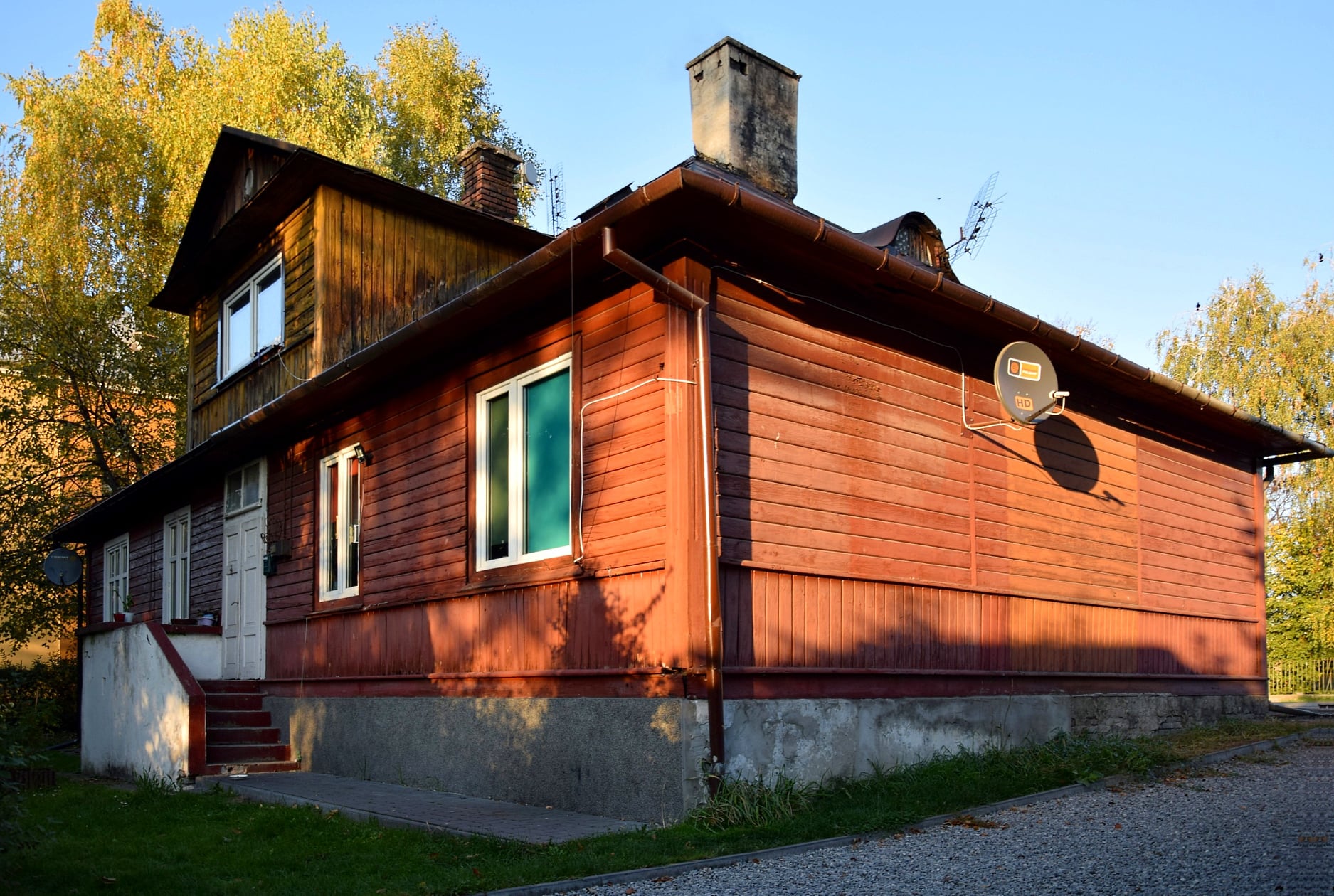
WS: Of course, architecture is in the foreground. My Facebook page clearly shows my interests - wooden Zamość and Zamość archives. The pace at which the old wooden buildings of Zamość are disappearing prompted me to document this very fragment of the landscape of urban architecture. Many of these buildings have already disappeared, and hardly anyone remembers that outside the fortress walls Zamość was almost entirely wooden. This was due, among others, to the fact that there was a ban on erecting permanent brick buildings near the fortress. It was for defensive reasons. In the event of an attack, it was easy to burn the wooden buildings and clean the foreground, which made the defense much easier. Apart from the fortress, 'bricked Zamość' is associated mainly with the interwar period in Poland.
WS: Of course, architecture is in the foreground. My Facebook page clearly shows my interests - wooden Zamość and Zamość archives. The pace at which the old wooden buildings of Zamość are disappearing prompted me to document this very fragment of the landscape of urban architecture. Many of these buildings have already disappeared, and hardly anyone remembers that outside the fortress walls Zamość was almost entirely wooden. This was due, among others, to the fact that there was a ban on erecting permanent brick buildings near the fortress. It was for defensive reasons. In the event of an attack, it was easy to burn the wooden buildings and clean the foreground, which made the defense much easier. Apart from the fortress, 'bricked Zamość' is associated mainly with the interwar period in Poland.


HG: Apart from satisfaction, what else does your passion give you?
WS: Getting to know the history of Zamość. Until my interest in photography, my knowledge of Zamość was 'basic'. I was, let's say, forced to undergo accelerated historical education. It was a shame not to know what was collected and photographed. And there is also what I have already talked about, training patience. And last but not least - health. Going, for example, for a photo session to Chełm, I turned on the application that counts the distance I cover. It turned out that I walked about 15 kilometers from 6.30 am to 3.00 pm. And this is the case with every trip to the field. Fulfilling this passion has also changed my perception of my surroundings. Now, walking down the street of a town or village, I pay attention to details that I once missed. I notice the decorations of the buildings: tympanum, sculpture, cornice, rustication, window framing, ornate porch, old pavement. Unfortunately, now everyone is staring at smartphone screens, and what surrounds us is worth our attention and often admiration. However, the greatest satisfaction in pursuing this passion is the reaction of those who looking at old photos. First of all, they evoke memories, have an educational function and finally help in identifying the places and times when photo was created.
HG: Are you only interested in photos of Zamość, or do you also collect photos from other places in Poland, or maybe in the world?
WS: It was inevitable. Apart from Zamość, I also became interested in other places where I lived and studied - Babimost, Wolsztyn, Krasnystaw, Hrubieszów and Lublin. While searching the archives, I found photos from many other Polish cities, of course, and it was a pity that they had not been made available. All these photos were posted on 'fotopolska.eu'. In total, on this website, I have already placed about 19 thousand archival photos and as many as my contemporary photos. In total it's over 38 thousand photos. Apart from Poland, I am also looking for photographs from the former Eastern Borderlands. I post these photos both on 'fotopolska', where there is a separate 'fotokresy' tab, and on the second, slightly less popular Kresy na starych fotografiach (Borderlands in old photographs).
HG: In our organization, a very important element of our projects is to increase their visibility. You also share the results of your work and passion with the community of Zamość. We would like to know how it works. Photos from your collection are currently available in Zamość Old Town. Where exactly are they located and how did they come to be permanently exhibited there?
WS: Archival photos from my collection and contemporary photos, of which I am the author, were placed in the windows of the building at Pereca 2 Street. Currently, it is the headquarters of the Zamojska Academy, and earlier the State Higher Vocational School. The seat of the editorial office of the academic newspaper 'Skafander' is also located there. It was the editor-in-chief of this newspaper, Daniel Czubara, who asked me to present photos from my collection as part of a project presenting the old and contemporary look of this building and its surroundings.
HG: You also organized an exhibition some time ago. What was the logistics of such an event and what was cooperation with others like?
WS: The exhibition took place in the 'pre-pandemic' times in September 2019. I decided that the time has come to present what I have managed to collect over the past years. It is one thing to share your photos on Facebook and another at an exhibition. For example, an aerial photography shown at the exhibition in the dimensions of 1.5 m x 1.5 m is much more impressive than on a monitor screen. Of course, a direct meeting with sympathizers and collectors of old photographs also has its value. Nowadays, such direct contact with the viewer is priceless. This exhibition was possible thanks to the cooperation with W. Łukasiński Housing Cooperative and its chairman Jerzy Nizioł. The cooperative made available a space at 'Hetman' department store and provided technical support for the entire exhibition.
WS: Getting to know the history of Zamość. Until my interest in photography, my knowledge of Zamość was 'basic'. I was, let's say, forced to undergo accelerated historical education. It was a shame not to know what was collected and photographed. And there is also what I have already talked about, training patience. And last but not least - health. Going, for example, for a photo session to Chełm, I turned on the application that counts the distance I cover. It turned out that I walked about 15 kilometers from 6.30 am to 3.00 pm. And this is the case with every trip to the field. Fulfilling this passion has also changed my perception of my surroundings. Now, walking down the street of a town or village, I pay attention to details that I once missed. I notice the decorations of the buildings: tympanum, sculpture, cornice, rustication, window framing, ornate porch, old pavement. Unfortunately, now everyone is staring at smartphone screens, and what surrounds us is worth our attention and often admiration. However, the greatest satisfaction in pursuing this passion is the reaction of those who looking at old photos. First of all, they evoke memories, have an educational function and finally help in identifying the places and times when photo was created.
HG: Are you only interested in photos of Zamość, or do you also collect photos from other places in Poland, or maybe in the world?
WS: It was inevitable. Apart from Zamość, I also became interested in other places where I lived and studied - Babimost, Wolsztyn, Krasnystaw, Hrubieszów and Lublin. While searching the archives, I found photos from many other Polish cities, of course, and it was a pity that they had not been made available. All these photos were posted on 'fotopolska.eu'. In total, on this website, I have already placed about 19 thousand archival photos and as many as my contemporary photos. In total it's over 38 thousand photos. Apart from Poland, I am also looking for photographs from the former Eastern Borderlands. I post these photos both on 'fotopolska', where there is a separate 'fotokresy' tab, and on the second, slightly less popular Kresy na starych fotografiach (Borderlands in old photographs).
HG: In our organization, a very important element of our projects is to increase their visibility. You also share the results of your work and passion with the community of Zamość. We would like to know how it works. Photos from your collection are currently available in Zamość Old Town. Where exactly are they located and how did they come to be permanently exhibited there?
WS: Archival photos from my collection and contemporary photos, of which I am the author, were placed in the windows of the building at Pereca 2 Street. Currently, it is the headquarters of the Zamojska Academy, and earlier the State Higher Vocational School. The seat of the editorial office of the academic newspaper 'Skafander' is also located there. It was the editor-in-chief of this newspaper, Daniel Czubara, who asked me to present photos from my collection as part of a project presenting the old and contemporary look of this building and its surroundings.
HG: You also organized an exhibition some time ago. What was the logistics of such an event and what was cooperation with others like?
WS: The exhibition took place in the 'pre-pandemic' times in September 2019. I decided that the time has come to present what I have managed to collect over the past years. It is one thing to share your photos on Facebook and another at an exhibition. For example, an aerial photography shown at the exhibition in the dimensions of 1.5 m x 1.5 m is much more impressive than on a monitor screen. Of course, a direct meeting with sympathizers and collectors of old photographs also has its value. Nowadays, such direct contact with the viewer is priceless. This exhibition was possible thanks to the cooperation with W. Łukasiński Housing Cooperative and its chairman Jerzy Nizioł. The cooperative made available a space at 'Hetman' department store and provided technical support for the entire exhibition.


HG: You are the founder and administrator of the fan page 'Wooden Zamość and Zamość Archives' on the social networking site Facebook, which is currently followed by almost 4.5 thousand people. When was it established and how does it work?
WS: I want to start with the fact that I am an absolute opponent of collecting old photos 'in a drawer'. It makes no sense. It's as if these photos don't exist. Showing them, sharing them in any form gives them a second life. 'Wooden Zamość' - because that is what it was called at the beginning, it was the next stage of developing and presenting my interests after 'fotopolska'. This fan page was created in 2015 and initially I presented my photographs of the disappearing wooden buildings of the city. Later, I extended the subject of the photos to 'Zamość Archives'. First of all, I am pleased that, after all, such a slightly niche subject is so popular. As I said, I don't hide my photos 'in a drawer'. In fact, I try to publish every newly discovered photograph and share it with others.
HG: Do you plan to publish an album with selected photos in the future?
WS: Many people ask me this question. I think it will be a natural consequence of my passion. Everyone wants to leave something behind. I dream about an album with photos from my collection.
HG: Thank you for the interview and we hope the collection will grow.
WS: I want to start with the fact that I am an absolute opponent of collecting old photos 'in a drawer'. It makes no sense. It's as if these photos don't exist. Showing them, sharing them in any form gives them a second life. 'Wooden Zamość' - because that is what it was called at the beginning, it was the next stage of developing and presenting my interests after 'fotopolska'. This fan page was created in 2015 and initially I presented my photographs of the disappearing wooden buildings of the city. Later, I extended the subject of the photos to 'Zamość Archives'. First of all, I am pleased that, after all, such a slightly niche subject is so popular. As I said, I don't hide my photos 'in a drawer'. In fact, I try to publish every newly discovered photograph and share it with others.
HG: Do you plan to publish an album with selected photos in the future?
WS: Many people ask me this question. I think it will be a natural consequence of my passion. Everyone wants to leave something behind. I dream about an album with photos from my collection.
HG: Thank you for the interview and we hope the collection will grow.
