 Angielski (ENG)
  Polski (PL)
Theater games locally
In 2012 Teo participated in the international training course focused on theater games (LARP), which took place in Poland. After returning to Romania, she and her friend Ruxandra, decided to engage more people to play LARPs together. How did it come out for them? What are the differences between theater games on projects and those organized as a hobby for people from local community? This is what we're going to talk about today. If you've never heard of Live Action Role Play (LARP), you can first read about it in our THEATER GAMES method tab.


Andrzej Smyk: Hi Teo. Do you remember when we met?
Teo Manole: Hi! Definitely – March 2012, in Motycz.

AS: Then we met again on projects and privately in Bucharest. At each meeting you mentioned that you are involved in LARP community in your local environment and I wanted to talk to you about it if you don’t mind. How did it happen that you found people around you who were interested in this topic and started to create something together?
TM: It was actually Ruxandra, who had initially told me about LARP and persuaded me to join her when she came to Poland for the second time, that suggested we start creating games for others to enjoy, too. Up until that point, apart from the LARPs I had contributed to on projects, I had created a couple of smaller games on my own, that I played in small circles of friends. They were both quite successful in that everyone got involved in the game and really had fun with their characters, but they were one-off events, that I barely have any record of. Save for some photographs of each, I didn’t even write down proper character cards, and the scenario lived in my head for a while before fading into oblivion. So when I started working with Ruxandra on LARPs for a broader audience, we were careful to do everything meticulously. We spent hours upon hours researching and creating stories, characters and mechanics. I’m really proud of what we were able to create in our very small team, including a network of like-minded people than then turned into a tightly-knit group of friends.
TM: It was actually Ruxandra, who had initially told me about LARP and persuaded me to join her when she came to Poland for the second time, that suggested we start creating games for others to enjoy, too. Up until that point, apart from the LARPs I had contributed to on projects, I had created a couple of smaller games on my own, that I played in small circles of friends. They were both quite successful in that everyone got involved in the game and really had fun with their characters, but they were one-off events, that I barely have any record of. Save for some photographs of each, I didn’t even write down proper character cards, and the scenario lived in my head for a while before fading into oblivion. So when I started working with Ruxandra on LARPs for a broader audience, we were careful to do everything meticulously. We spent hours upon hours researching and creating stories, characters and mechanics. I’m really proud of what we were able to create in our very small team, including a network of like-minded people than then turned into a tightly-knit group of friends.


AS: You had the opportunity to participate in LARPs during international projects. Did the ones you played privately have a similar atmosphere?
TM: For the most part, yes. People were generally very into the atmosphere of the game and immersed with ease. There was a lot less to go by when allocating roles in our events, as we had people joining that we'd never met before, and all we could learn about them was based on their Facebook profiles and our limited interaction before the game.
However, people were usually pleased with their characters and did their best to make the most out of them. We also made sure to give everyone plenty of background info and missions, so they'd have fun and want to keep coming. ;-)
The actual decor was something that was differently handled. We had initially tried to get all players to contribute to building the setting, just as we had on projects, but it always boiled down to a handful of people actually engaged in this, so we eventually took it upon ourselves to create the scenery for each game.
TM: For the most part, yes. People were generally very into the atmosphere of the game and immersed with ease. There was a lot less to go by when allocating roles in our events, as we had people joining that we'd never met before, and all we could learn about them was based on their Facebook profiles and our limited interaction before the game.
However, people were usually pleased with their characters and did their best to make the most out of them. We also made sure to give everyone plenty of background info and missions, so they'd have fun and want to keep coming. ;-)
The actual decor was something that was differently handled. We had initially tried to get all players to contribute to building the setting, just as we had on projects, but it always boiled down to a handful of people actually engaged in this, so we eventually took it upon ourselves to create the scenery for each game.
AS: What can be done during private LARPs that would not have been possible on LARP during the project?
TM: I think the biggest benefit was that all of our players shared a mother tongue – Romanian – so there were no linguistic barriers, as it sometimes happens on projects. This is also what allowed us to create balanced characters, as I said before, so that no one felt left out and could play their heart out to the best of their abilities. We also had a very versatile playing environment, that could be easily transformed to host a range of possible scenarios; so for example, because the place had once been a cafe, there was a bar that proved very useful, and also a storage room that could double as a dungeon... and so on.
I think we also managed to turn a downside into an advantage: because every game had about 2/3 players who had never played or even heard of LARP before, we had to give everyone a very efficient crash course right before the game started. This meant that we had to keep things super simple in terms of mechanics, which challenged us to find the most effective ways to tell the story in the character sheets. This led to more genuine interactions during the game, with more satisfying outcomes than overcomplicated mechanics would bring.
TM: I think the biggest benefit was that all of our players shared a mother tongue – Romanian – so there were no linguistic barriers, as it sometimes happens on projects. This is also what allowed us to create balanced characters, as I said before, so that no one felt left out and could play their heart out to the best of their abilities. We also had a very versatile playing environment, that could be easily transformed to host a range of possible scenarios; so for example, because the place had once been a cafe, there was a bar that proved very useful, and also a storage room that could double as a dungeon... and so on.
I think we also managed to turn a downside into an advantage: because every game had about 2/3 players who had never played or even heard of LARP before, we had to give everyone a very efficient crash course right before the game started. This meant that we had to keep things super simple in terms of mechanics, which challenged us to find the most effective ways to tell the story in the character sheets. This led to more genuine interactions during the game, with more satisfying outcomes than overcomplicated mechanics would bring.

AS: As you know, LARPs can be created in different ways, with different climates and with different rules. In fact, only our imagination is the limit here. Will you tell us about those LARPs that you created and were the most interesting for you?
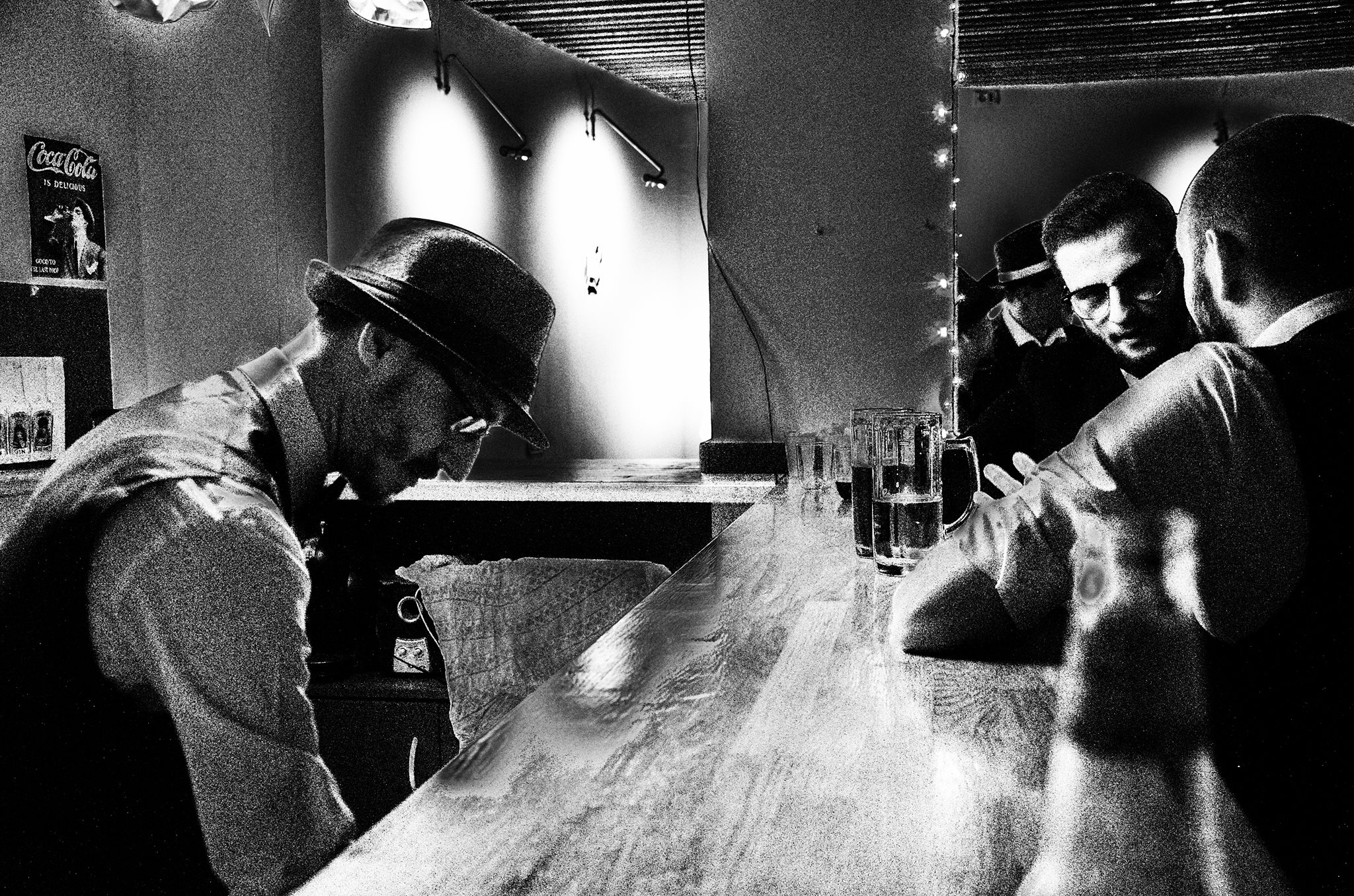
TM: Our very first LARP was about the mafia in 1920s Atlantic City. We had a ton of fun with writing it, but we were super nervous when it first ran, because almost none of our other players had been in a LARP before and we were desperate to make them feel it was worth their time. Because of this, we didn’t get to enjoy it so much ourselves (though the others did!), so we decided to reboot it about a year later, with more experience under our belt, and an even bigger host of characters.
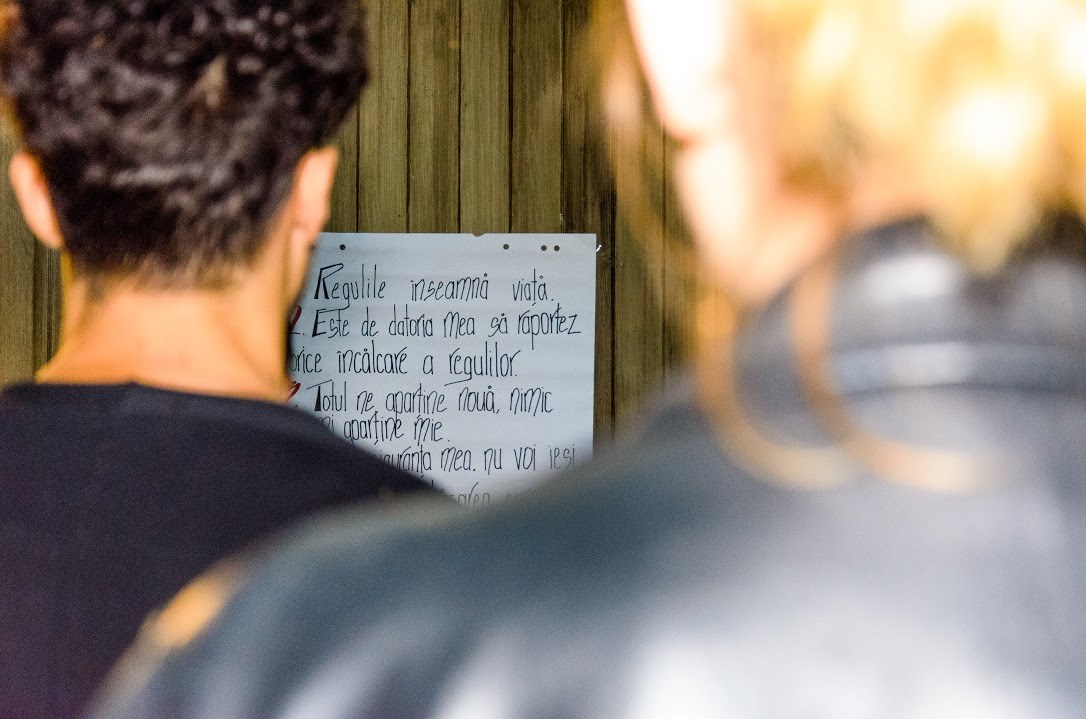
Our second was based on the very first LARP both Ruxandra and I had played in Poland, Utopia, but we took it down our own separate path, with a very isolated dystopian society which starts to receive faint signals from the world outside their walls, which they had all believed dead. It had some of the liveliest and most engaged players, great decor and super creepy dictator-worshipping mantras... what was there not to like?
AS: Have you ever experienced a situation when scenario did not work completely...? People didn't play roles, were frustrated and said in the end that it wasn't cool?
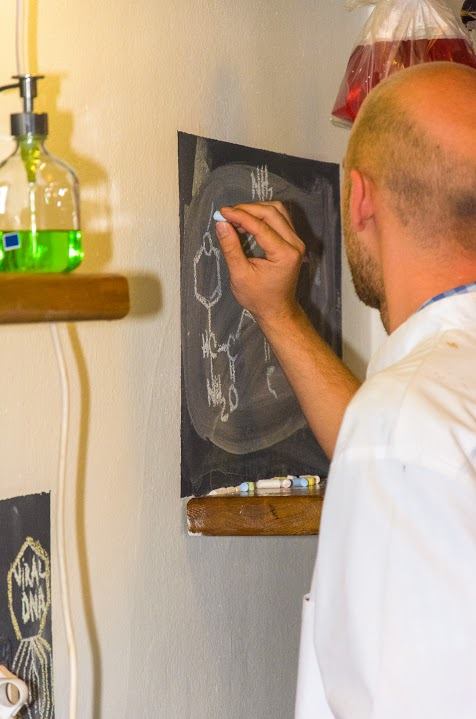
TM: We had a couple that didn’t turn out the way we had envisioned them. One was my personal favourite in terms of writing process. All in all, it took about 80 hours of research, brainstorming and individual writing and we were super happy with it. However, the game itself was really tiring for us because of overcomplicated mechanics, puzzles that were too difficult for some of the players, as well as a couple of misfits that had completely missed the memo and turned up in jeans and a T-shirt to play their roles. In the end, most of the players did have a great time in their roles as (now powerless) ancient gods, so I would definitely try to play this one again, perhaps with a smaller group.
Probably our least dynamic game (and one of our smallest) was The Experiment. It was definitely a well-thought out psychological game and could yield an exciting outcome with the right players. No one complained about the game, but we felt we could have got much more out of it with more commitment and immersion on everyone’s behalf.
TM: Our very first LARP was about the mafia in 1920s Atlantic City. We had a ton of fun with writing it, but we were super nervous when it first ran, because almost none of our other players had been in a LARP before and we were desperate to make them feel it was worth their time. Because of this, we didn’t get to enjoy it so much ourselves (though the others did!), so we decided to reboot it about a year later, with more experience under our belt, and an even bigger host of characters.
Our second was based on the very first LARP both Ruxandra and I had played in Poland, Utopia, but we took it down our own separate path, with a very isolated dystopian society which starts to receive faint signals from the world outside their walls, which they had all believed dead. It had some of the liveliest and most engaged players, great decor and super creepy dictator-worshipping mantras... what was there not to like?
AS: Have you ever experienced a situation when scenario did not work completely...? People didn't play roles, were frustrated and said in the end that it wasn't cool?
TM: We had a couple that didn’t turn out the way we had envisioned them. One was my personal favourite in terms of writing process. All in all, it took about 80 hours of research, brainstorming and individual writing and we were super happy with it. However, the game itself was really tiring for us because of overcomplicated mechanics, puzzles that were too difficult for some of the players, as well as a couple of misfits that had completely missed the memo and turned up in jeans and a T-shirt to play their roles. In the end, most of the players did have a great time in their roles as (now powerless) ancient gods, so I would definitely try to play this one again, perhaps with a smaller group.
Probably our least dynamic game (and one of our smallest) was The Experiment. It was definitely a well-thought out psychological game and could yield an exciting outcome with the right players. No one complained about the game, but we felt we could have got much more out of it with more commitment and immersion on everyone’s behalf.


AS: Each of us has our favorite settings and the ones we don't like. I definitely do not fit into a fantasy atmosphere, and I like post-apocalyptic scenarios. How is it with you?
TM: I’m also a big fan of post-apocalyptic, dystopian LARPs. I have, however, had a very pleasant surprise in the form of a very realistically set game about rival gangs (bikers, cholos, Russian mobsters etc.) This was by far my absolute favourite, possibly also because even as gamemasters we had character roles and were able to enjoy the gameplay to the fullest.
AS: There are many ways to get involved in LARPs. You can write scenarios, create character cards, supervise the game as a Game Master, to be a player, be a special effects specialist, create game mechanics ... Which of these roles you like the most?
TM: I like all of these roles, though I must admit it’s been too long since I’ve played in a LARP I didn’t write. I thoroughly enjoyed the whole creative process behind designing LARPs (both on projects and in private events) but I always had the most fun when I gave my GM role a character background beyond your classical NPC, which allowed me to live the best of both worlds.
AS: Do you somehow capture the LARPs you created? Do you have a website or blog?
TM: Our last LARP was in late 2017, but there is a photographic account of all the games we created and played in this formula on our Facebook Fanpage, which is still up and running:
TM: I’m also a big fan of post-apocalyptic, dystopian LARPs. I have, however, had a very pleasant surprise in the form of a very realistically set game about rival gangs (bikers, cholos, Russian mobsters etc.) This was by far my absolute favourite, possibly also because even as gamemasters we had character roles and were able to enjoy the gameplay to the fullest.
AS: There are many ways to get involved in LARPs. You can write scenarios, create character cards, supervise the game as a Game Master, to be a player, be a special effects specialist, create game mechanics ... Which of these roles you like the most?
TM: I like all of these roles, though I must admit it’s been too long since I’ve played in a LARP I didn’t write. I thoroughly enjoyed the whole creative process behind designing LARPs (both on projects and in private events) but I always had the most fun when I gave my GM role a character background beyond your classical NPC, which allowed me to live the best of both worlds.
AS: Do you somehow capture the LARPs you created? Do you have a website or blog?
TM: Our last LARP was in late 2017, but there is a photographic account of all the games we created and played in this formula on our Facebook Fanpage, which is still up and running:

AS: Thanks for the interview, Teo. I hope you will visit us in the near future and finally play a LARP that someone else wrote.
TM: Thank you for the interview, I had a really fun time remembering and reliving the best – and the most challenging – parts of writing and playing in LARPs! I hope we have a chance to do it together again sometime! ;-)
TM: Thank you for the interview, I had a really fun time remembering and reliving the best – and the most challenging – parts of writing and playing in LARPs! I hope we have a chance to do it together again sometime! ;-)
