Angielski (ENG)
  Polski (PL)
Stay Tuned!
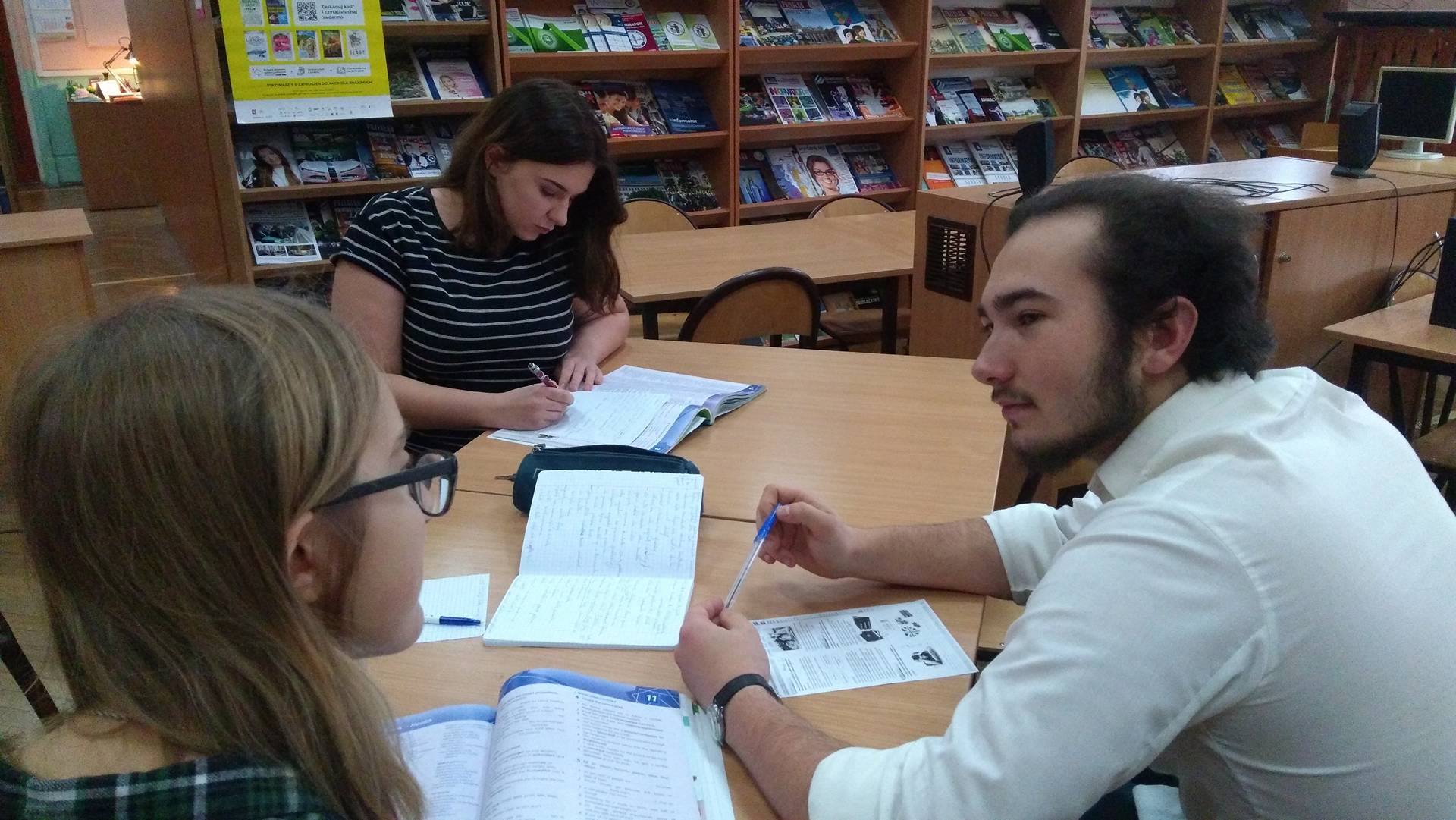
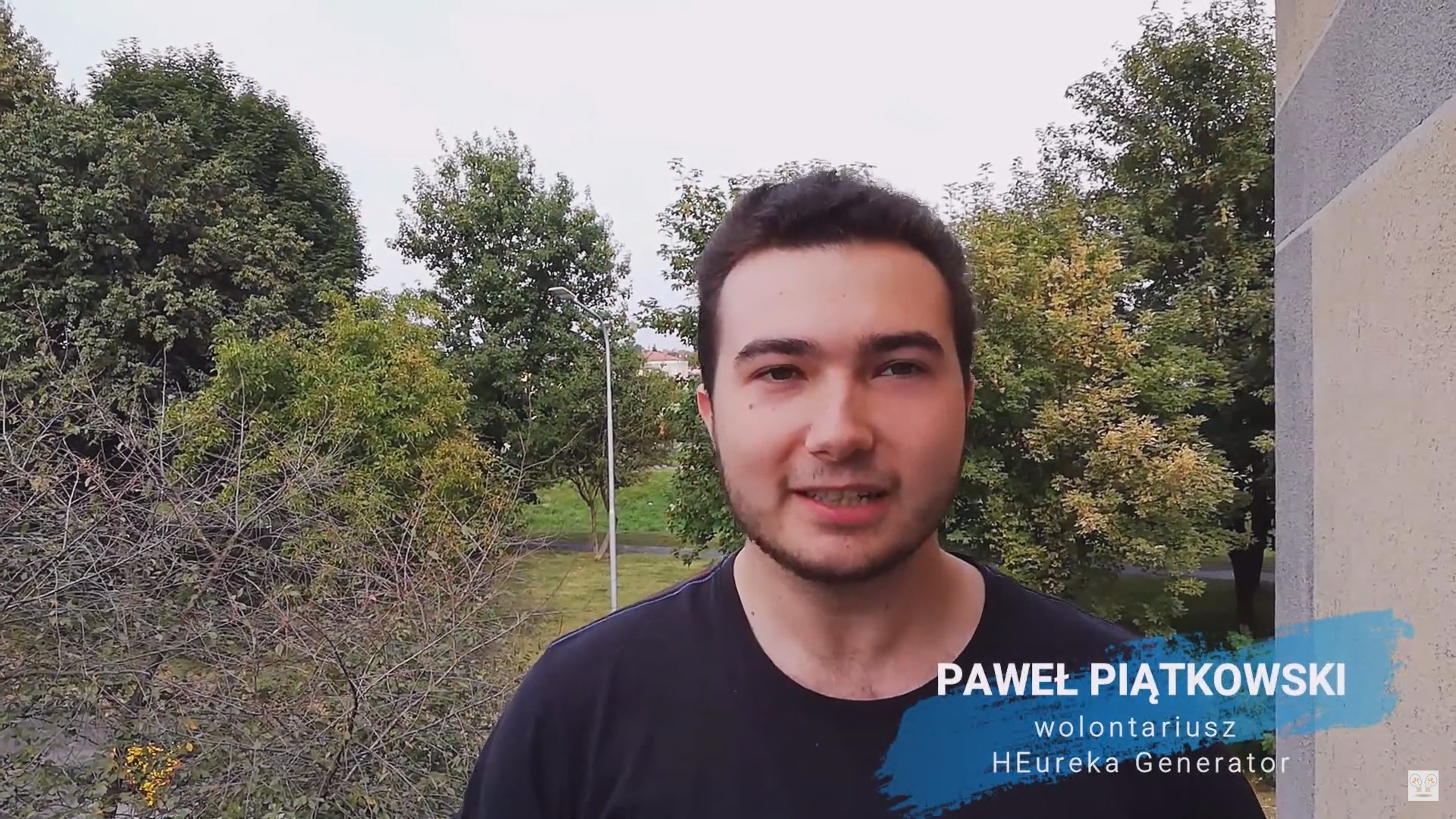
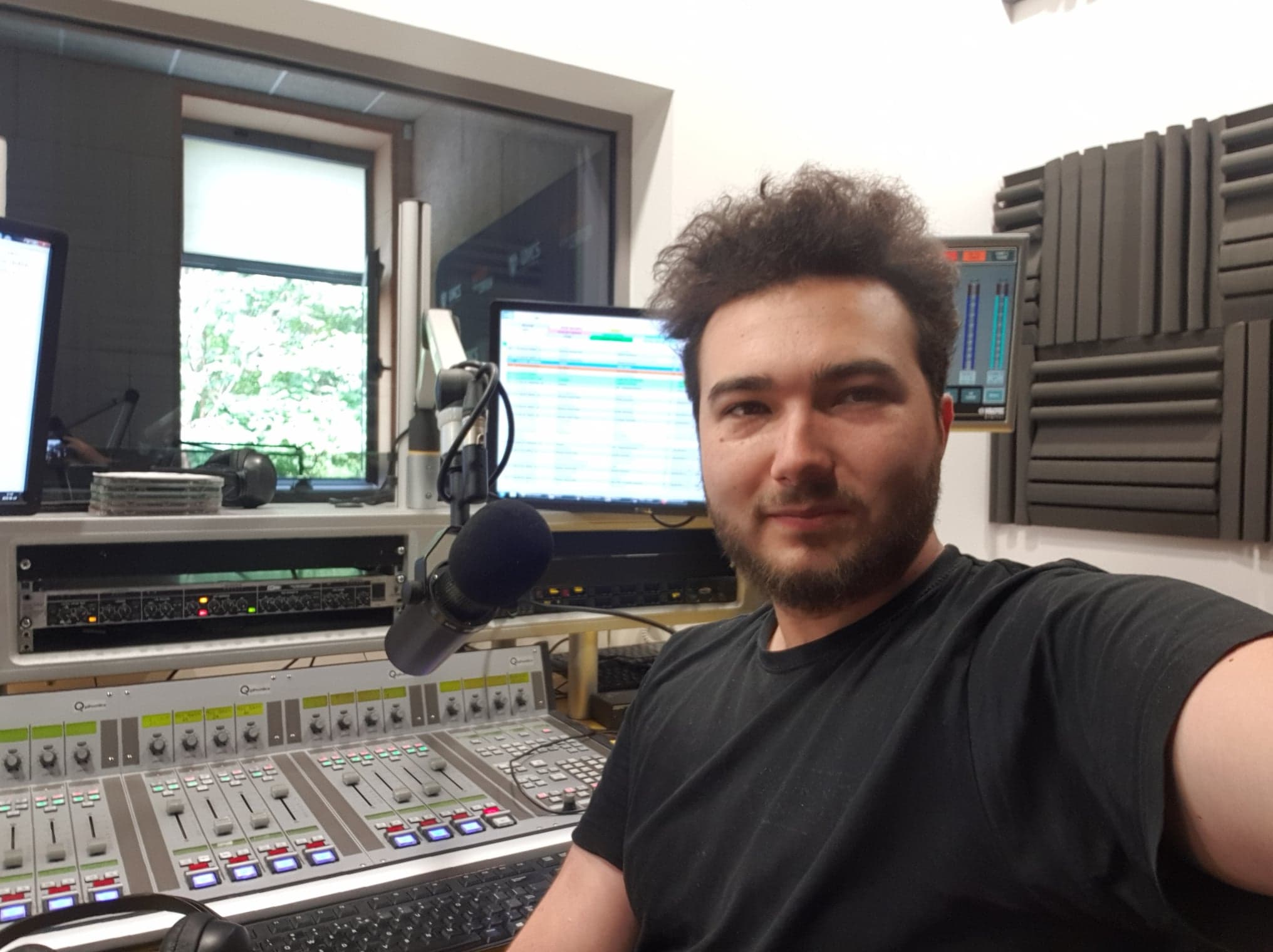
Paweł Piątkowski has been a HEureka’s volunteer for over two years. He worked with us during the initiatives and projects implemented by us in Poland and abroad, especially those related to the history of the 20th century. Paweł often helps us with creating and editing audio-visual materials too. However, not everyone knows about one more passion of our volunteer. This is what our conversation will be about today ;-)
HEureka Generator: Hi Paweł, we are not going to talk about projects today ;-)
Paweł Piątkowski: That's good, because it is a book-size topic :D
HG: You are active in the legendary Lublin student radio, called Radio Centrum. What made you go to the radio?
PP: In fact, in my case, Radio came to me. While I was a member of the jury at Unia Film Festival, I met Agnieszka Bąk, who was already hosting a program about movies on Radio Centrum. We had a good chat and shortly afterwards I got a proposal to participate in it. Program was called 'As You Look'. It means that my adventure with radio started from the very end. It was only after a few months of co-hosting this program that I went to the music department of this radio.
Paweł Piątkowski: That's good, because it is a book-size topic :D
HG: You are active in the legendary Lublin student radio, called Radio Centrum. What made you go to the radio?
PP: In fact, in my case, Radio came to me. While I was a member of the jury at Unia Film Festival, I met Agnieszka Bąk, who was already hosting a program about movies on Radio Centrum. We had a good chat and shortly afterwards I got a proposal to participate in it. Program was called 'As You Look'. It means that my adventure with radio started from the very end. It was only after a few months of co-hosting this program that I went to the music department of this radio.
HG: What is the first step if a young person wants to become a radio host?
PP: There is no one way. You can find a student radio and just go to recruitment, or you can record your voice sample and send it to the radio stations you like the most. First of all, you have to want it and have some dedication to do it. Everything else can be worked out. I often hear from my friends that they do not want to go to recruitment because they do not have a 'radio voice'. I've never heard more nonsense in my life. There is no such thing as a radio voice. Everyone on the air tries to be themselves. Even in the case of some speech impediment, a speech therapist is available on each radio who will help us develop a voice so that every listener can understand us.
PP: There is no one way. You can find a student radio and just go to recruitment, or you can record your voice sample and send it to the radio stations you like the most. First of all, you have to want it and have some dedication to do it. Everything else can be worked out. I often hear from my friends that they do not want to go to recruitment because they do not have a 'radio voice'. I've never heard more nonsense in my life. There is no such thing as a radio voice. Everyone on the air tries to be themselves. Even in the case of some speech impediment, a speech therapist is available on each radio who will help us develop a voice so that every listener can understand us.
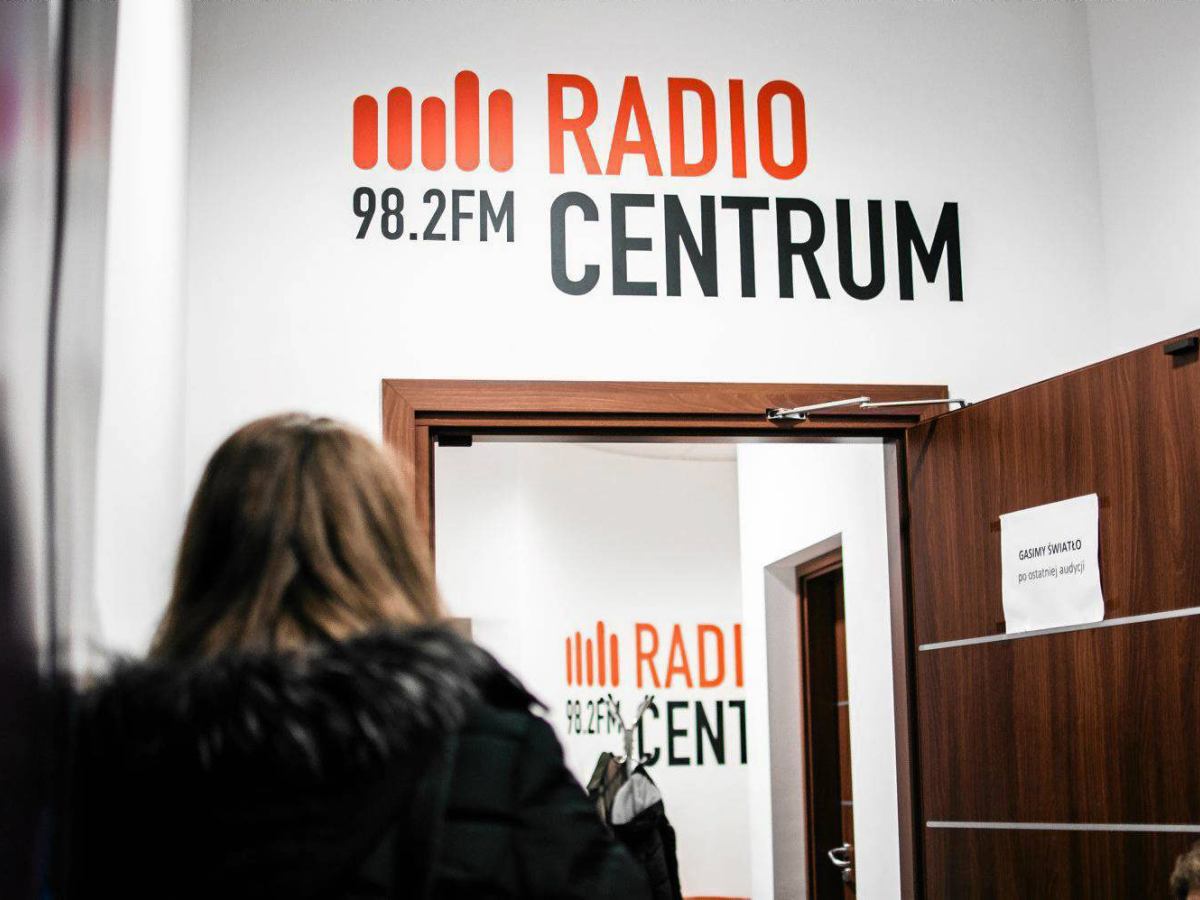
More information on how to apply to Radio Centrum:
HG: Was the recruitment process difficult?
PP: The recruitment itself is not necessarily the case, unless you are in the witness protection program, because you have to write a CV ;) It is difficult to clash with people who have been on the air for many years because at the beginning you can see the gap between the level of their programs and yours.
HG: Tell us what exactly are you doing on the radio right now?
PP: I am a member of the music department of the radio. I run programs such as morning 'Head up', afternoon 'Rush Hour' or evening 'The Most of the Rock'. In practice, from time to time I jump in with my voice between pieces of music and talk about things that are more or less interesting. I carry out events during programs and from time to time I write texts and reviews for the Radio website.
PP: The recruitment itself is not necessarily the case, unless you are in the witness protection program, because you have to write a CV ;) It is difficult to clash with people who have been on the air for many years because at the beginning you can see the gap between the level of their programs and yours.
HG: Tell us what exactly are you doing on the radio right now?
PP: I am a member of the music department of the radio. I run programs such as morning 'Head up', afternoon 'Rush Hour' or evening 'The Most of the Rock'. In practice, from time to time I jump in with my voice between pieces of music and talk about things that are more or less interesting. I carry out events during programs and from time to time I write texts and reviews for the Radio website.
HG: How was it in the beginning? Did you do the same as you do now, or did you have to do some practice first?
PP: The beginning is the same for everyone. After we go through the recruitment process, we come to look at the work of those who already run programs. They try to show us their ways of running the program, they teach us to invent entrances and create punch lines, and also teach how not to spoil the implementation of events in order not to make main editor sorry ;) Next thing is to record 'Demo'. It is a 'dry program' which is not on air. Such a demo, one or several, has to be heard by the head of the editorial office and the head of our department. When the level is ok, we slowly start running our first simple programs.
HG: Are there many people your age in the Radio Centrum?
PP: We are trying to fill the air with young people who want to learn everything they need in a large radio station as it is a student’s radio. There is no room for mistakes or aerial experimentation in such places. Most of the editorial staff are still studying, although we also have mentors who have been on the air for many years, and watching them at work is somehow magical, because it's true 'on the air' masterpiece :)
PP: The beginning is the same for everyone. After we go through the recruitment process, we come to look at the work of those who already run programs. They try to show us their ways of running the program, they teach us to invent entrances and create punch lines, and also teach how not to spoil the implementation of events in order not to make main editor sorry ;) Next thing is to record 'Demo'. It is a 'dry program' which is not on air. Such a demo, one or several, has to be heard by the head of the editorial office and the head of our department. When the level is ok, we slowly start running our first simple programs.
HG: Are there many people your age in the Radio Centrum?
PP: We are trying to fill the air with young people who want to learn everything they need in a large radio station as it is a student’s radio. There is no room for mistakes or aerial experimentation in such places. Most of the editorial staff are still studying, although we also have mentors who have been on the air for many years, and watching them at work is somehow magical, because it's true 'on the air' masterpiece :)
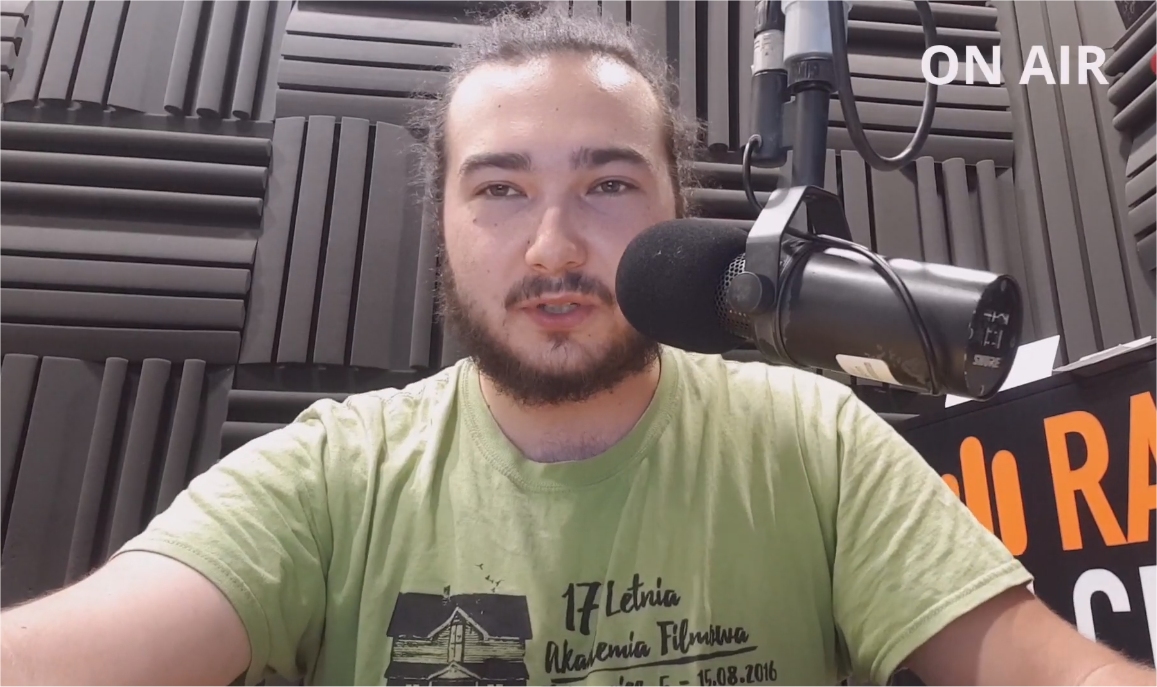
HG: Do you stress when you get on the air? After all, a lot of people will listen to it and it is not difficult to slip or forget something...
PP: By turning on the microphone, everyone of us tries to speak as if they were talking to a good friend. Of course, each of us sometimes misses a note or does not say something, but the microphone will accept everything, so ‘Show must go on’.
The trick is not to make mistakes, the trick is to be able not to break the rhythm and show that there is no mythical figure sitting in front of the microphone, but another person who tries to make the time somehow pleasant. When I make a mistake or don't add something important, I try to refer to it in the next entry and explain what I meant. It's worth keeping a distance, laughing at yourself and not treating the listener as someone who probably won't notice anyway. In any radio, respect for the listener is very important. And we are reminded of this many times at editorial meetings.
HG: Now it's time for a work anecdote ;-) What fun or unusual happened in your work?
PP: Accidents, funny situations and various unusual situations are normal part of the day on the radio. I could talk half a day about how the processor in the PC that puts music on the air burned during my program, and I had to go on with the program with what I had around me, i.e. in practice, very quickly changing discs.
I have a bit of a fame of a 'radio unlucky guy', because recently, also during my program, someone entered the wrong code on the door and it triggered a terrible alarm perfectly during my weather forecast. Nobody prepared us for it and we had to act quickly. I announced the Zombie apocalypse in the weather and played a song called 'Zombies!' by Lao Che band. It starts with the text: 'Alarm, radio alarm beeps, They tell you to get zombie ointment'. In this way, a potentially crisis situation was turned into a joke.
PP: By turning on the microphone, everyone of us tries to speak as if they were talking to a good friend. Of course, each of us sometimes misses a note or does not say something, but the microphone will accept everything, so ‘Show must go on’.
The trick is not to make mistakes, the trick is to be able not to break the rhythm and show that there is no mythical figure sitting in front of the microphone, but another person who tries to make the time somehow pleasant. When I make a mistake or don't add something important, I try to refer to it in the next entry and explain what I meant. It's worth keeping a distance, laughing at yourself and not treating the listener as someone who probably won't notice anyway. In any radio, respect for the listener is very important. And we are reminded of this many times at editorial meetings.
HG: Now it's time for a work anecdote ;-) What fun or unusual happened in your work?
PP: Accidents, funny situations and various unusual situations are normal part of the day on the radio. I could talk half a day about how the processor in the PC that puts music on the air burned during my program, and I had to go on with the program with what I had around me, i.e. in practice, very quickly changing discs.
I have a bit of a fame of a 'radio unlucky guy', because recently, also during my program, someone entered the wrong code on the door and it triggered a terrible alarm perfectly during my weather forecast. Nobody prepared us for it and we had to act quickly. I announced the Zombie apocalypse in the weather and played a song called 'Zombies!' by Lao Che band. It starts with the text: 'Alarm, radio alarm beeps, They tell you to get zombie ointment'. In this way, a potentially crisis situation was turned into a joke.
HG: Has anyone ever in Lublin recognized you by your voice? ;-) ?
PP: Once, in the neighborhood grocery Żabka store, each time before the morning program (which starts at 6 am) I bought my survival kit, i.e. an energy drink and Hot Dog. Once, when I left the store, completely sleepy, I said, "Thank you, till later and have a bearable Thursday," which is exactly how I finish my programs. Then the saleswoman shouted, "I knew that I had heard you somewhere before!" As it turned out, Radio Centrum was turned on in this shop all the time.
HG: Radio is an adventure for now or maybe it is your idea for future life?
PP: I'm still wondering. Working at Radio gives me a lot of fun and is very satisfying. I would like to get to a nationwide radio station someday, but there is still a long way to go and it is not known if it will work. It is also worth having a plan B, so I'm also going to finish my studies.
HG: Do you have any favorite Polish radio DJ that you modeled on?
PP: There are a some Polish radio DJs whom I like to listen to. I enjoy listening to Jacek Tomkowicz from RMF FM, Łukasz Ciechański (currently in Radio 3) also runs very good programs. In addition, Tomasz Kasprzyk. That's my top 3.
However, the key of making good radio programs is not to follow someone but to develop your own 'on air' style. If someone follows a good example of a well-known radio host, you can hear it strongly and sometimes you get the impression that the DJ is being dishonest, because he doesn't show himself.
HG: Do you think that in ten years people will still want to listen to the radio?
PP: I am absolutely sure of it. However, it seems to me that the radio is not quite keeping up with the technology development. It ages with its listeners. Listening to the radio is a habit that was developed by listeners. My parents' generation at a young age listened to the radio all the time, and they still listen to the radio to this day. Sometimes to the same station and sometimes simply to radio as a medium.
Young people, however, rarely turn on the radio. A young man who is familiar with technology listens to music on streaming services. It has an algorithm that selects music based on what he listened to and thus knows his taste perfectly. There is no way that the content on the radio is perfect for everyone, so if the radio stations do not start to narrow the audience, they will not have a chance to survive the clash with giants such as streaming services.
Radio, however, has the advantage that it can compete with streaming services. In that it can convey some added value. Be it in the form of an interesting commentary or the charisma of the DJ. So, will people want to listen to the radio in 10 years? I think so, but only if Radio evolves and, among other things, starts using the Internet. It will also create content there, and it will not broadcast as it was in the 1930s.
HG: Paweł, thank you for the interview. It was very interesting.
PP: Thank you too. Stay tuned ! ;)
PP: Once, in the neighborhood grocery Żabka store, each time before the morning program (which starts at 6 am) I bought my survival kit, i.e. an energy drink and Hot Dog. Once, when I left the store, completely sleepy, I said, "Thank you, till later and have a bearable Thursday," which is exactly how I finish my programs. Then the saleswoman shouted, "I knew that I had heard you somewhere before!" As it turned out, Radio Centrum was turned on in this shop all the time.
HG: Radio is an adventure for now or maybe it is your idea for future life?
PP: I'm still wondering. Working at Radio gives me a lot of fun and is very satisfying. I would like to get to a nationwide radio station someday, but there is still a long way to go and it is not known if it will work. It is also worth having a plan B, so I'm also going to finish my studies.
HG: Do you have any favorite Polish radio DJ that you modeled on?
PP: There are a some Polish radio DJs whom I like to listen to. I enjoy listening to Jacek Tomkowicz from RMF FM, Łukasz Ciechański (currently in Radio 3) also runs very good programs. In addition, Tomasz Kasprzyk. That's my top 3.
However, the key of making good radio programs is not to follow someone but to develop your own 'on air' style. If someone follows a good example of a well-known radio host, you can hear it strongly and sometimes you get the impression that the DJ is being dishonest, because he doesn't show himself.
HG: Do you think that in ten years people will still want to listen to the radio?
PP: I am absolutely sure of it. However, it seems to me that the radio is not quite keeping up with the technology development. It ages with its listeners. Listening to the radio is a habit that was developed by listeners. My parents' generation at a young age listened to the radio all the time, and they still listen to the radio to this day. Sometimes to the same station and sometimes simply to radio as a medium.
Young people, however, rarely turn on the radio. A young man who is familiar with technology listens to music on streaming services. It has an algorithm that selects music based on what he listened to and thus knows his taste perfectly. There is no way that the content on the radio is perfect for everyone, so if the radio stations do not start to narrow the audience, they will not have a chance to survive the clash with giants such as streaming services.
Radio, however, has the advantage that it can compete with streaming services. In that it can convey some added value. Be it in the form of an interesting commentary or the charisma of the DJ. So, will people want to listen to the radio in 10 years? I think so, but only if Radio evolves and, among other things, starts using the Internet. It will also create content there, and it will not broadcast as it was in the 1930s.
HG: Paweł, thank you for the interview. It was very interesting.
PP: Thank you too. Stay tuned ! ;)
You will hear Paweł most often on Thursday morning between 6:00 am and 10:00 am and on Saturday band between 1:00 pm and 5:00 pm. Just click here: