 Angielski (ENG)
  Polski (PL)
In the Zamość Fortress
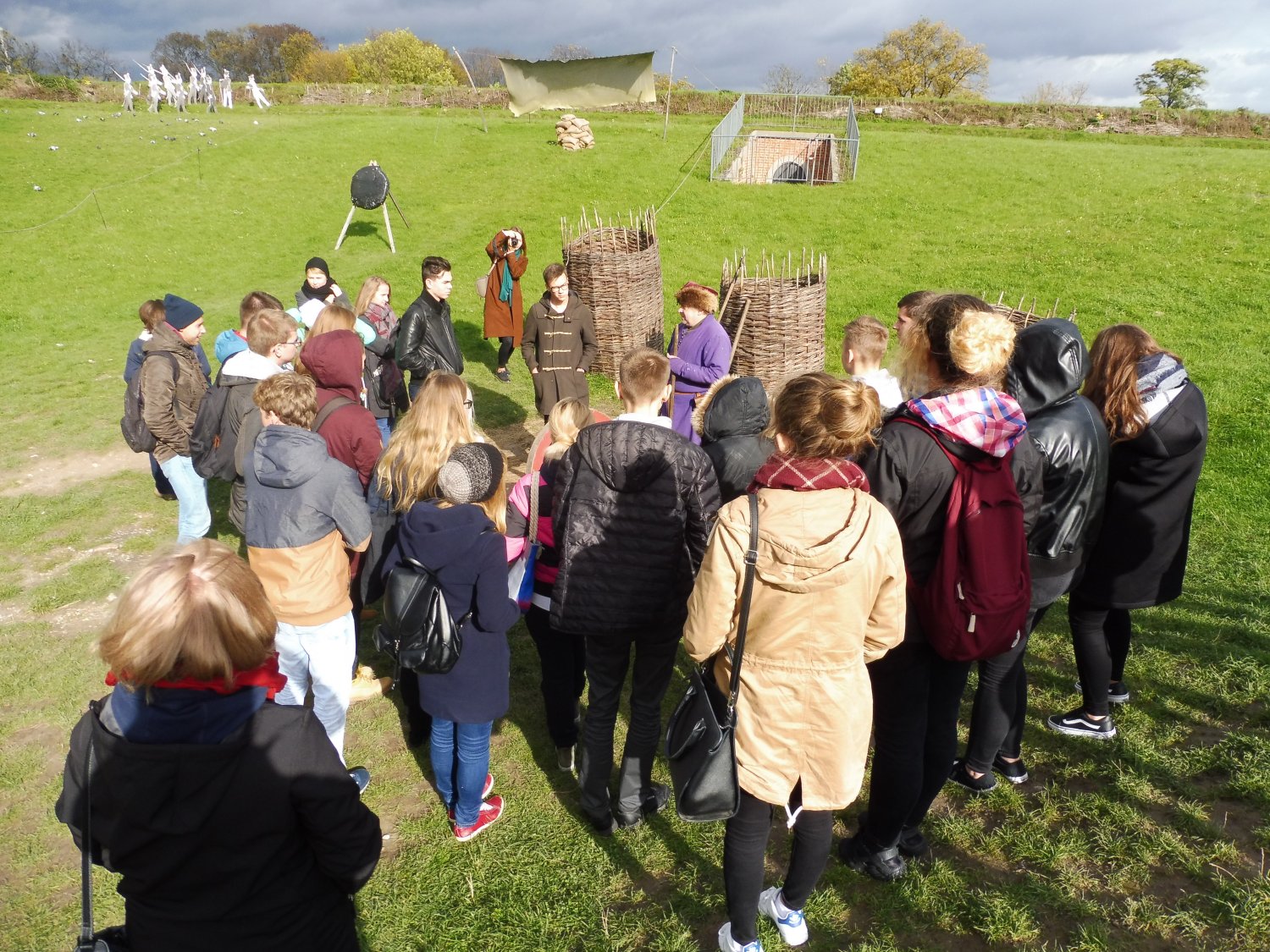
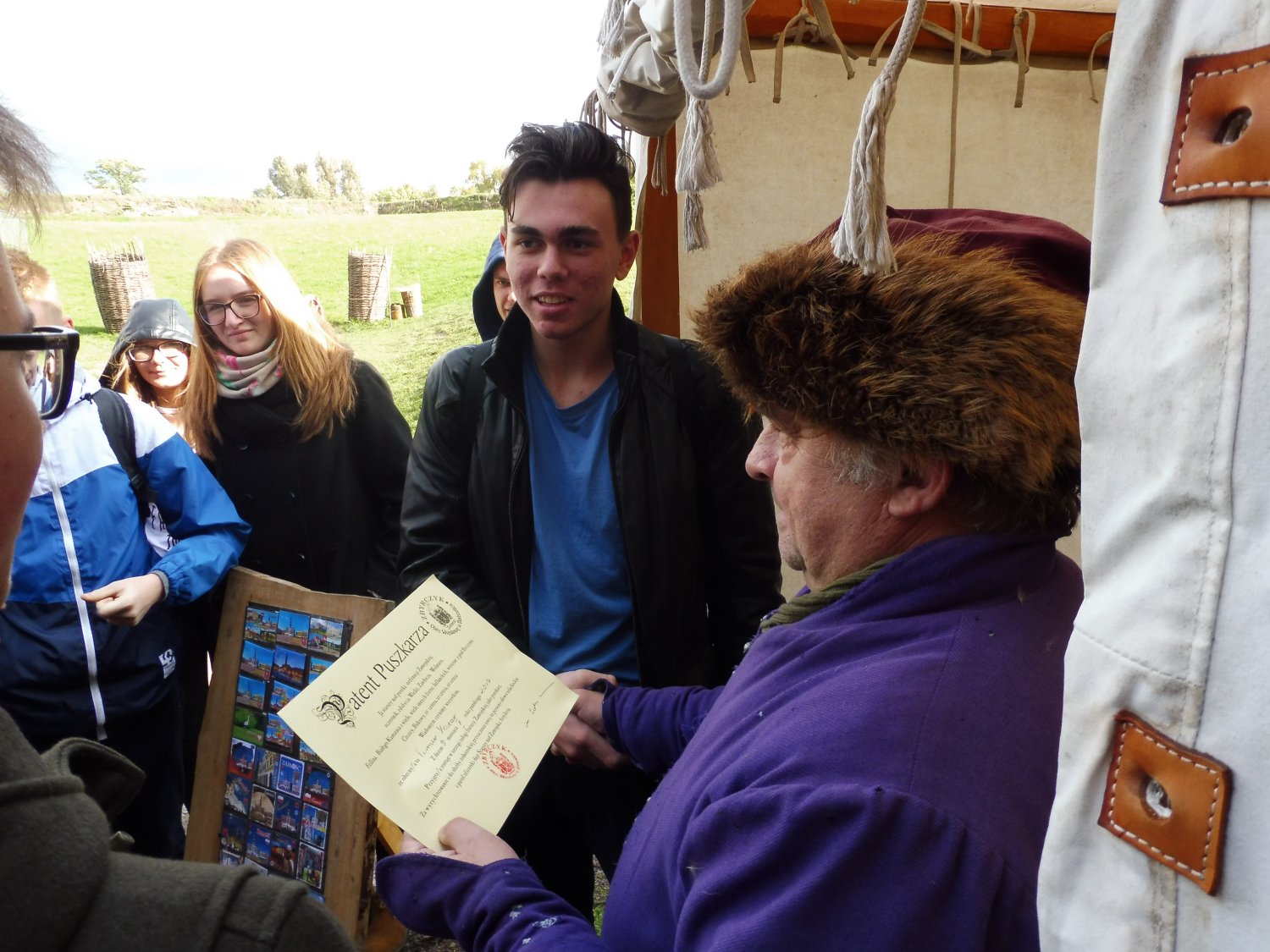
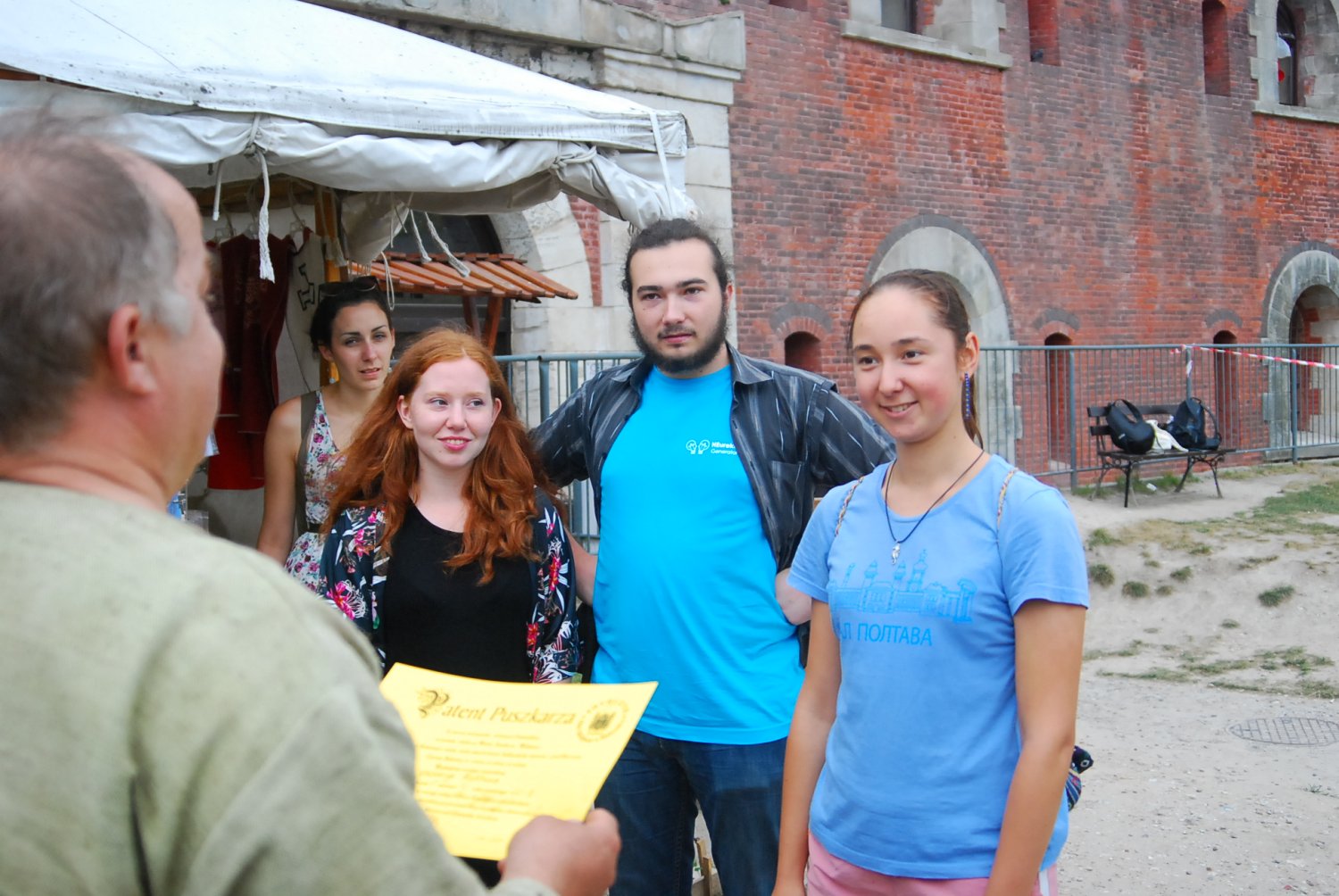
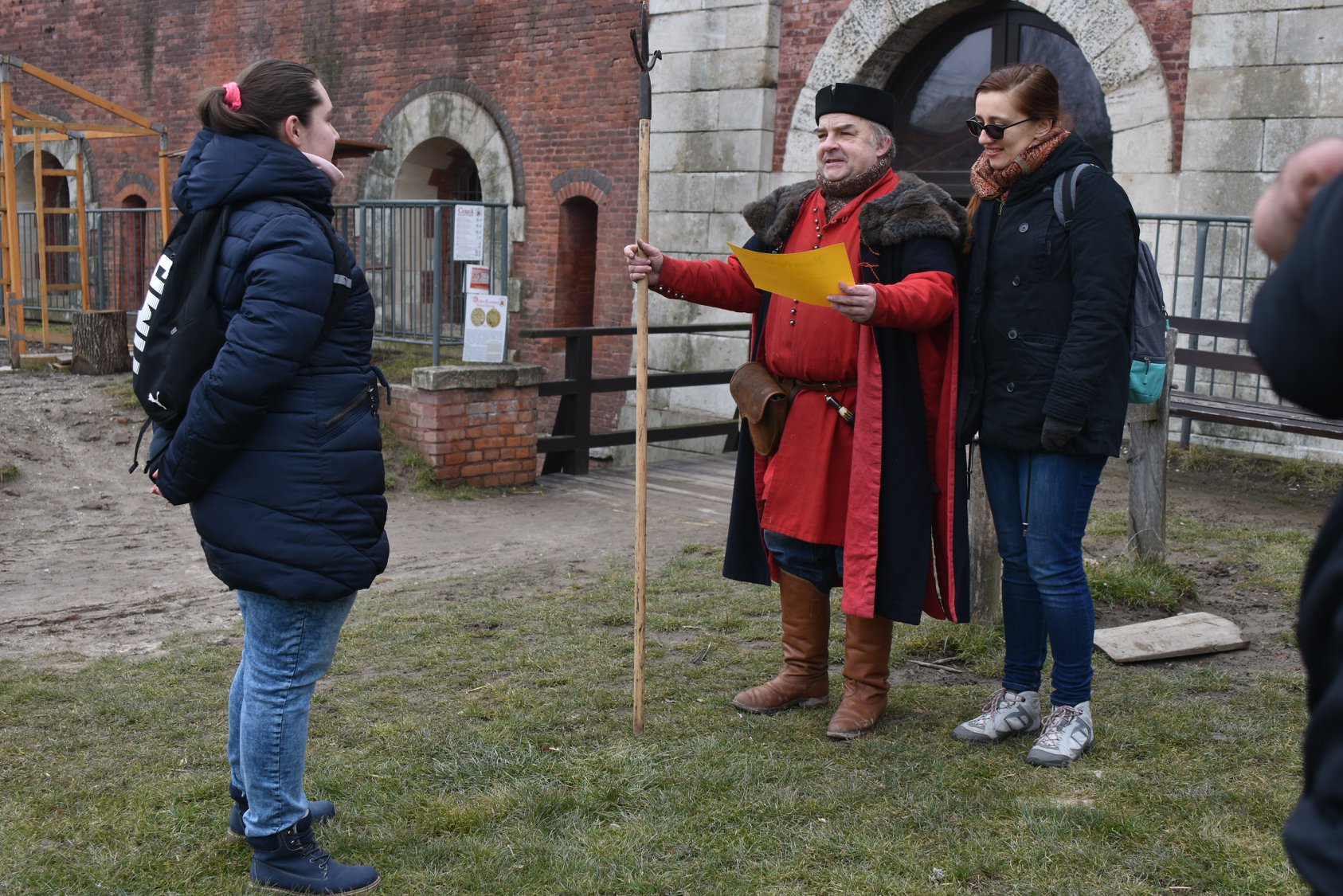
When we implement our projects and initiatives, in which our partners from other parts of Europe also participate, we always try to interact as much as possible with the local community, our local partners and people who contribute to strengthening the positive image of our city. One of the favorite and most appreciated attraction by our guests is the meeting with Leszek Sobuś on the walls of the Zamość fortress. What does Leszek do? You will find out by reading the next interview in the land of HEurekia.

HEureka Generator: Hi Leszek, thank you for agreeing to talk to us. For many years, we can feel the atmosphere of Zamość city from previous centuries among others thanks to your efforts. What is the actual name of what you do?
Leszek Sobuś: I am a historical reenactor. Who is the history reenactor? Well, he is a man who spends money on fun with something that, in the opinion of normal people, is not needed by anyone for life. And they are right. Interests similar to mine have several thousand people in Poland, Europe and the world, and it is actually only us. Thousands of people watching our historical shows, admiring our costumes, weapons, appearance, do not realize how much knowledge about history each of us is wearing.
HG: Most often we can meet you on the so-called bastion neck, on the city walls. What are you doing there?
LS: What am I doing on the bastion? Apart from a purely commercial reasons, we try to show what life was like in a place like the Zamość Fortress. We describe structure of the city walls, how cannons were loaded, how gunpowder was produced. We have been sitting on the bastion for 12 years, introducing tourists to the history of the city and the weapons used in the fortress. In addition to historical reconstruction, I am also a guide around Zamość and Roztocze, where my historical knowledge is also useful.
HG: You are also active in non-governmental organizations.
LS: I am the chairperson of the Bastion Foundation which helps to do what I described above. It makes it easier for us to handle historical events that we organize in Zamość and elsewhere in the country. We are also organizers of trips to other similar events in the country and abroad, giving them legal personality. The Foundation also manages a photo gallery located on the city walls.
HG: Historical reconstructions are one of the most spectacular events that take place in Zamość. How are they prepared and what is your role in it?
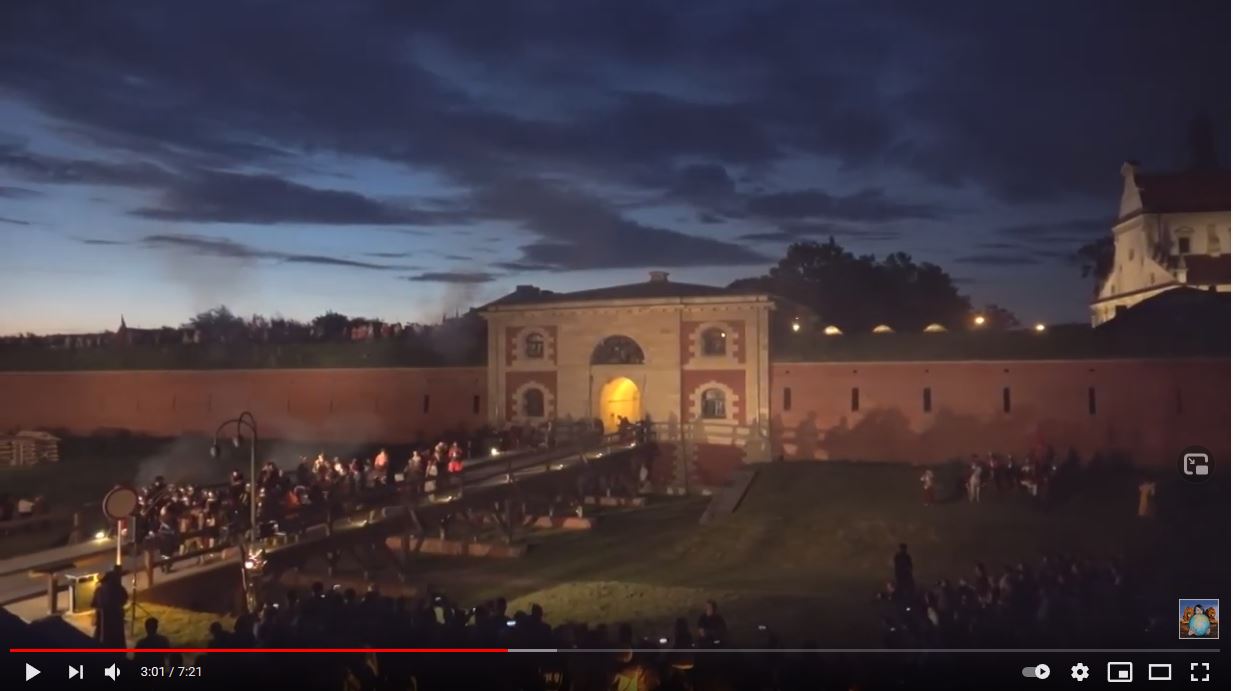
LS: We organized the 'Storm of the Zamość fortress' until 2019. It is a great historical spectacle that brings closer the siege of Zamość in the 17th century, in which over 300 soldiers participated. It gathered 20,000 audiense. The first reconstruction was organized by a group from Lublin in 2004 and they were the organizers of the show.
Leszek Sobuś: I am a historical reenactor. Who is the history reenactor? Well, he is a man who spends money on fun with something that, in the opinion of normal people, is not needed by anyone for life. And they are right. Interests similar to mine have several thousand people in Poland, Europe and the world, and it is actually only us. Thousands of people watching our historical shows, admiring our costumes, weapons, appearance, do not realize how much knowledge about history each of us is wearing.
HG: Most often we can meet you on the so-called bastion neck, on the city walls. What are you doing there?
LS: What am I doing on the bastion? Apart from a purely commercial reasons, we try to show what life was like in a place like the Zamość Fortress. We describe structure of the city walls, how cannons were loaded, how gunpowder was produced. We have been sitting on the bastion for 12 years, introducing tourists to the history of the city and the weapons used in the fortress. In addition to historical reconstruction, I am also a guide around Zamość and Roztocze, where my historical knowledge is also useful.
HG: You are also active in non-governmental organizations.
LS: I am the chairperson of the Bastion Foundation which helps to do what I described above. It makes it easier for us to handle historical events that we organize in Zamość and elsewhere in the country. We are also organizers of trips to other similar events in the country and abroad, giving them legal personality. The Foundation also manages a photo gallery located on the city walls.
HG: Historical reconstructions are one of the most spectacular events that take place in Zamość. How are they prepared and what is your role in it?
LS: We organized the 'Storm of the Zamość fortress' until 2019. It is a great historical spectacle that brings closer the siege of Zamość in the 17th century, in which over 300 soldiers participated. It gathered 20,000 audiense. The first reconstruction was organized by a group from Lublin in 2004 and they were the organizers of the show.
We also co-organized the historical spectacle Zamość 1920, ie the siege of the city by Semyon Budyonny, Russian cavalryman, military commander during the Polish-Soviet War in 1920.
We often get help from people who are not directly related to the reconstruction groups. They provide us with logistical and material assistance (firewood, hay for tents, transport, or just organizational assistance). It’s helping with things that we would not be able to handle ourselves. Often these are small things, but such things are very important at the end. These are dozens of people who helped us, even with advice. Such advice was often crucial for the entire show.
HG: How long does it take to prepare such an event?
LS: The organization of a big show, such as the 'Storm of the Zamość Fortress', practically never ends. Already during the ongoing edition, we are thinking about the next - about the skirmish sites, the scenario, how to get funds ... We make decissions with friends from Poland and abroad for the next reconstruction here and for other events.
HG: How long does it take to prepare such an event?
LS: The organization of a big show, such as the 'Storm of the Zamość Fortress', practically never ends. Already during the ongoing edition, we are thinking about the next - about the skirmish sites, the scenario, how to get funds ... We make decissions with friends from Poland and abroad for the next reconstruction here and for other events.
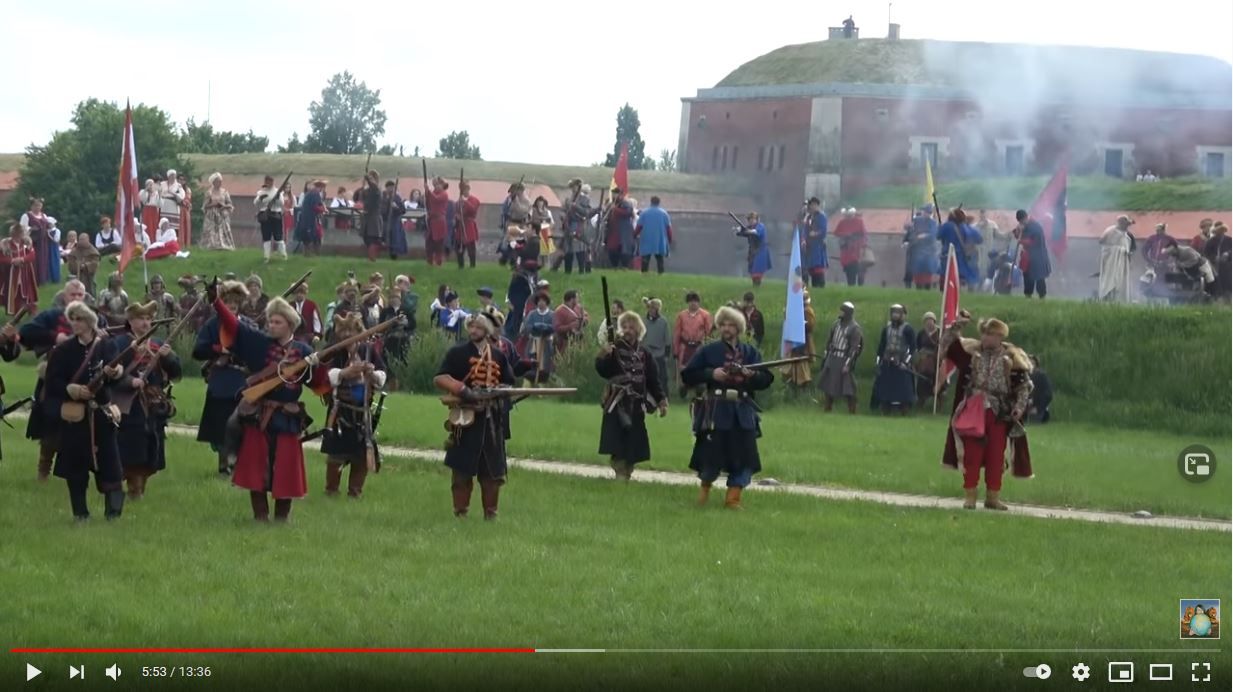
HG: Such a spectacle is not only connected to a historical weapon, scenario and the right place for its performance. Outfits are still needed. Where do you get historical costumes?
From Shoes to various historical, traditional caps, this is the historical knowledge that we had to learn when sewing, ordering, creating this equipment. Even the smallest element of it, e.g. 'guz' (a button), had to be found in historical sources, hand-made from materials as close as possible to the original. Our weapons, tents, camp equipment as well. And this is what people outside of our group of ‘historical nuts’ see. Behind all of this there is our tremendous work and cooperation to get the best effect.
Everyone of us has his own private, family and professional life, often far from this hobby. However, the knowledge of thousands of people who want to share it with others means that we often look better than replicas of costumes and equipment from museums. So my zupan (typical upper class male attire from the late 16th to the first half of the 18th century in the multi-ethnic Polish–Lithuanian Commonwealth) is the result of the knowledge of all reenactors and the people interested in reconstruction of such clothes. Often they are hundreds or even thousands of people. Each of us has a bit of knowledge that we all use.
HG: How many people are in your group?
LS: There are 40 people in the group and each of us has a smaller or bigger input in the preparation of the event. Part of the preparations for the reconstruction event are also trips to similar events in Poland and abroad. In Poland, they include Gniew, Gdańsk, Castle in Tenczynek, Wiśnicz... Abroad, it is Esztergom, Tata, or Gyula in Hungary. In the Czech Republic it is Frydland, in the Netherlands Grolle and Bortange, in Ukraine Kamieniec Podolski, Beresteczko, Chocim. During these trips, we meet other people with similar hobby and we discuss their coming to Zamość for the Storm.
From Shoes to various historical, traditional caps, this is the historical knowledge that we had to learn when sewing, ordering, creating this equipment. Even the smallest element of it, e.g. 'guz' (a button), had to be found in historical sources, hand-made from materials as close as possible to the original. Our weapons, tents, camp equipment as well. And this is what people outside of our group of ‘historical nuts’ see. Behind all of this there is our tremendous work and cooperation to get the best effect.
Everyone of us has his own private, family and professional life, often far from this hobby. However, the knowledge of thousands of people who want to share it with others means that we often look better than replicas of costumes and equipment from museums. So my zupan (typical upper class male attire from the late 16th to the first half of the 18th century in the multi-ethnic Polish–Lithuanian Commonwealth) is the result of the knowledge of all reenactors and the people interested in reconstruction of such clothes. Often they are hundreds or even thousands of people. Each of us has a bit of knowledge that we all use.
HG: How many people are in your group?
LS: There are 40 people in the group and each of us has a smaller or bigger input in the preparation of the event. Part of the preparations for the reconstruction event are also trips to similar events in Poland and abroad. In Poland, they include Gniew, Gdańsk, Castle in Tenczynek, Wiśnicz... Abroad, it is Esztergom, Tata, or Gyula in Hungary. In the Czech Republic it is Frydland, in the Netherlands Grolle and Bortange, in Ukraine Kamieniec Podolski, Beresteczko, Chocim. During these trips, we meet other people with similar hobby and we discuss their coming to Zamość for the Storm.
HG: Work on reconstructions is definitely associated with interesting stories. Can you tell us one?
LS: What I always remember is how I became a chorister from Bydgoszcz city. And it was like this: during one of the storms, at 2 am, the municipal police called me and asked 'Leszek, come to the main city square. If you don't come, it may end up badly'. My first impulse was to send them up the tree. 2 in the morning, and they want to chase me out of the warm hay and tell me to wander around the city.
The argument that it may end up badly, however, convinced me to go to the main city square. As I walked along Grodzka street nearby, I heard a singing that touched deeply even such an antimusical talent as me. I started to be affraid that inhabitants of the square surroundings may loose hearing, I almost ran to the square. ...And there, the first thing I saw were our poor municipal policemen standing and looking at the garden of one onf the restaurants with expressions that they did not know what to do.
When they saw me, it was clear that they were relieved, because they put on me the obligation to pacify the 'choir of armored Bydgoszcz' singing taditional song 'Hej Sokoły' (traditional Slavic song). Well..., some of them sang, and two persuaded the waiter to give them more beer, because the army wants to drink, and this disgusting peasant refuses to serve the noblemen.
As a consequence, after the conversation, I myself convinced waiter to give them last beer and they promised to stop singing. But nope... They started singing something else. Just not 'Hej Sokoły' anymore, but something more peaceful. In the meantime, I convinced the waiter that he should lend us the glasses in which he served beer, and gentlemen also made a condition: I sing with them or they start another concert on the main city square. If I sing, they will go to the camp.
Whoever has heard me singing once, does not want to experience it again. Apparently the pain is so big that everything that lives is escaping. I believe that it’s because I avoid singing soberly. I sing always when I’m tipsy, or maybe I’m tipsy sometimes because I start to sing. There are different versions...
And so by joining the choir I was able to take them to the camp. On the second day, they were quiet for most of the time. Without their singings, colleagues claimed that they did not hear anything because they were drinking at night and had a hangover. I say they were deafened by my singing. Why? Because when we meet a few times a year and they sing (and they even like to do it when they are sober), when I get closer, they stop and start again after I leave. It's probably because of respect for my singing skills.
HG: Who is your favorite historical character?
LS: My favourite historical figure is Jerzy Michał Wołodyjowski. Let me add that the version of Henryk Sienkiewicz (Polish writer), not the real one. The real Mr. Michał was simply a good landlord who had a land in Przemyskie region of Poland. Thanks to Sienkiewicz books i started to be interested in history. My father played a significant role here too as he read the trilogy to us instead of bedtime stories.
LS: What I always remember is how I became a chorister from Bydgoszcz city. And it was like this: during one of the storms, at 2 am, the municipal police called me and asked 'Leszek, come to the main city square. If you don't come, it may end up badly'. My first impulse was to send them up the tree. 2 in the morning, and they want to chase me out of the warm hay and tell me to wander around the city.
The argument that it may end up badly, however, convinced me to go to the main city square. As I walked along Grodzka street nearby, I heard a singing that touched deeply even such an antimusical talent as me. I started to be affraid that inhabitants of the square surroundings may loose hearing, I almost ran to the square. ...And there, the first thing I saw were our poor municipal policemen standing and looking at the garden of one onf the restaurants with expressions that they did not know what to do.
When they saw me, it was clear that they were relieved, because they put on me the obligation to pacify the 'choir of armored Bydgoszcz' singing taditional song 'Hej Sokoły' (traditional Slavic song). Well..., some of them sang, and two persuaded the waiter to give them more beer, because the army wants to drink, and this disgusting peasant refuses to serve the noblemen.
As a consequence, after the conversation, I myself convinced waiter to give them last beer and they promised to stop singing. But nope... They started singing something else. Just not 'Hej Sokoły' anymore, but something more peaceful. In the meantime, I convinced the waiter that he should lend us the glasses in which he served beer, and gentlemen also made a condition: I sing with them or they start another concert on the main city square. If I sing, they will go to the camp.
Whoever has heard me singing once, does not want to experience it again. Apparently the pain is so big that everything that lives is escaping. I believe that it’s because I avoid singing soberly. I sing always when I’m tipsy, or maybe I’m tipsy sometimes because I start to sing. There are different versions...
And so by joining the choir I was able to take them to the camp. On the second day, they were quiet for most of the time. Without their singings, colleagues claimed that they did not hear anything because they were drinking at night and had a hangover. I say they were deafened by my singing. Why? Because when we meet a few times a year and they sing (and they even like to do it when they are sober), when I get closer, they stop and start again after I leave. It's probably because of respect for my singing skills.
HG: Who is your favorite historical character?
LS: My favourite historical figure is Jerzy Michał Wołodyjowski. Let me add that the version of Henryk Sienkiewicz (Polish writer), not the real one. The real Mr. Michał was simply a good landlord who had a land in Przemyskie region of Poland. Thanks to Sienkiewicz books i started to be interested in history. My father played a significant role here too as he read the trilogy to us instead of bedtime stories.
HG: If you could be born and live in a different historical period, this would be...?
LS: If I could decide when to live, I would stay with the beginning of the 21st century. Living in my favorite 17th century, I would not be able to reenact it and I would be bored (laughs).
HG: Last question. The snow is already slowly melting. When will you appear on the city walls again?
LS: I'm going back to the bastion as soon as the pandemic restrictions are over.
HG: Thank you very much for the interview. We will definitely visit you on the walls soon.
LS: See you there!
LS: If I could decide when to live, I would stay with the beginning of the 21st century. Living in my favorite 17th century, I would not be able to reenact it and I would be bored (laughs).
HG: Last question. The snow is already slowly melting. When will you appear on the city walls again?
LS: I'm going back to the bastion as soon as the pandemic restrictions are over.
HG: Thank you very much for the interview. We will definitely visit you on the walls soon.
LS: See you there!
