 Angielski (ENG)
  Polski (PL)
Feijoada and pierogue
Jola is HEureka's friend, who has taken part in many of our activities, both as a participant and also as a group leader. She also helps us in the implementation of our actions as a photographer or a translator. Today, however, we will not talk about projects, but about her passion, which is the Portuguese language and the culture of Brazil.
HEureka Generator: Hello Jola. Apart from participating in our projects, you also work with Portuguese and study Iberian Philology, where you learn Brazilian Portuguese. Due to the fact that you are studying Iberian Philology, you have managed to visit Portugal and Brazil. Can you tell us more about it?
Jolanta Kowalak: Sure.
HG: During your studies you went to Erasmus in Portugal for four months. How did you manage to communicate with Portuguese people (who speak a different version of Portuguese than you)?
JK: I went there on the third year of my studies, so my Portuguese was quite good. In general, Portuguese people switch to English very often when they hear Brazilian Portuguese or some strange accent. For example, the owner of the apartment I lived in was around 50 and spoke very little English. My friend who lived with me spoke the European variant of Portuguese very well, but still the owner started talking to us in Portuguese only after a few weeks.
Generally speaking, I didn't speak much with the Portuguese, only in shops or restaurants. There are a lot of Brazilians in Portugal and they are more open than the Portuguese, so when it comes to longer talks, I have had more contact with them.
During the classes, I had no problems with understanding the lecturers, because from the second year of my studies I had classes only in Portuguese, and we also had lecturers from Portugal, so I had time to get used to that language.
Jolanta Kowalak: Sure.
HG: During your studies you went to Erasmus in Portugal for four months. How did you manage to communicate with Portuguese people (who speak a different version of Portuguese than you)?
JK: I went there on the third year of my studies, so my Portuguese was quite good. In general, Portuguese people switch to English very often when they hear Brazilian Portuguese or some strange accent. For example, the owner of the apartment I lived in was around 50 and spoke very little English. My friend who lived with me spoke the European variant of Portuguese very well, but still the owner started talking to us in Portuguese only after a few weeks.
Generally speaking, I didn't speak much with the Portuguese, only in shops or restaurants. There are a lot of Brazilians in Portugal and they are more open than the Portuguese, so when it comes to longer talks, I have had more contact with them.
During the classes, I had no problems with understanding the lecturers, because from the second year of my studies I had classes only in Portuguese, and we also had lecturers from Portugal, so I had time to get used to that language.


HG: What exactly did you study there?
JK: On the Erasmus student exchange you find subjects that are equivalent to those you learn at your home university. I studied at the Faculty of Philology, but I didn't choose any specific field, because my situation was that no subject was similar to those I had in Poland; so I had to attend classes both in Portugal and Poland, online or after returning. For example, I had to write four papers on Brazilian literature during my stay in Portugal, not participating in classes, and then pass the exam, because at the University of Lisbon there was no subject on this topic that semester.
HG: Let's go back to the language for a moment. What are the differences between European Portuguese and Brazilian Portuguese?
JK: Portuguese people often skip vowels, making the words blend into one so it's difficult to understand them. Brazilian language is more melodic because Brazilians, on the other hand, add a lot of vowels to many words. This can be heard very clearly in words of English origin which they "brazilianize" by softening the ending. In Brazil, they laugh at the European pronunciation, and in Portugal, at the fact that Brazilians speak Portuguese from the 18th century.
HG: Why did you choose to study the Brazilian version?
JK: I would like to say it was my dream, but it was not. It was random. When I chose between the two options, I had no idea what the difference was. Someone from the higher grades recommended this version because the lecturers were better and it was true. I listened to some Brazilian music back then, so maybe that influenced my choice a bit as well.
HG: Apart from Portugal, you have also been to Brazil twice. Was it related to your studies?
JK: Yes and no. I was there for a month and a half the first time. Formally, it was a student exchange, but I did not attend any classes there. But since it's Brazil and I'm learning about Brazil, it was somehow related to my studies. A friend and I went there to teach Polish language to Brazilian people. She studied Polish, so it happened thanks to her.
JK: On the Erasmus student exchange you find subjects that are equivalent to those you learn at your home university. I studied at the Faculty of Philology, but I didn't choose any specific field, because my situation was that no subject was similar to those I had in Poland; so I had to attend classes both in Portugal and Poland, online or after returning. For example, I had to write four papers on Brazilian literature during my stay in Portugal, not participating in classes, and then pass the exam, because at the University of Lisbon there was no subject on this topic that semester.
HG: Let's go back to the language for a moment. What are the differences between European Portuguese and Brazilian Portuguese?
JK: Portuguese people often skip vowels, making the words blend into one so it's difficult to understand them. Brazilian language is more melodic because Brazilians, on the other hand, add a lot of vowels to many words. This can be heard very clearly in words of English origin which they "brazilianize" by softening the ending. In Brazil, they laugh at the European pronunciation, and in Portugal, at the fact that Brazilians speak Portuguese from the 18th century.
HG: Why did you choose to study the Brazilian version?
JK: I would like to say it was my dream, but it was not. It was random. When I chose between the two options, I had no idea what the difference was. Someone from the higher grades recommended this version because the lecturers were better and it was true. I listened to some Brazilian music back then, so maybe that influenced my choice a bit as well.
HG: Apart from Portugal, you have also been to Brazil twice. Was it related to your studies?
JK: Yes and no. I was there for a month and a half the first time. Formally, it was a student exchange, but I did not attend any classes there. But since it's Brazil and I'm learning about Brazil, it was somehow related to my studies. A friend and I went there to teach Polish language to Brazilian people. She studied Polish, so it happened thanks to her.

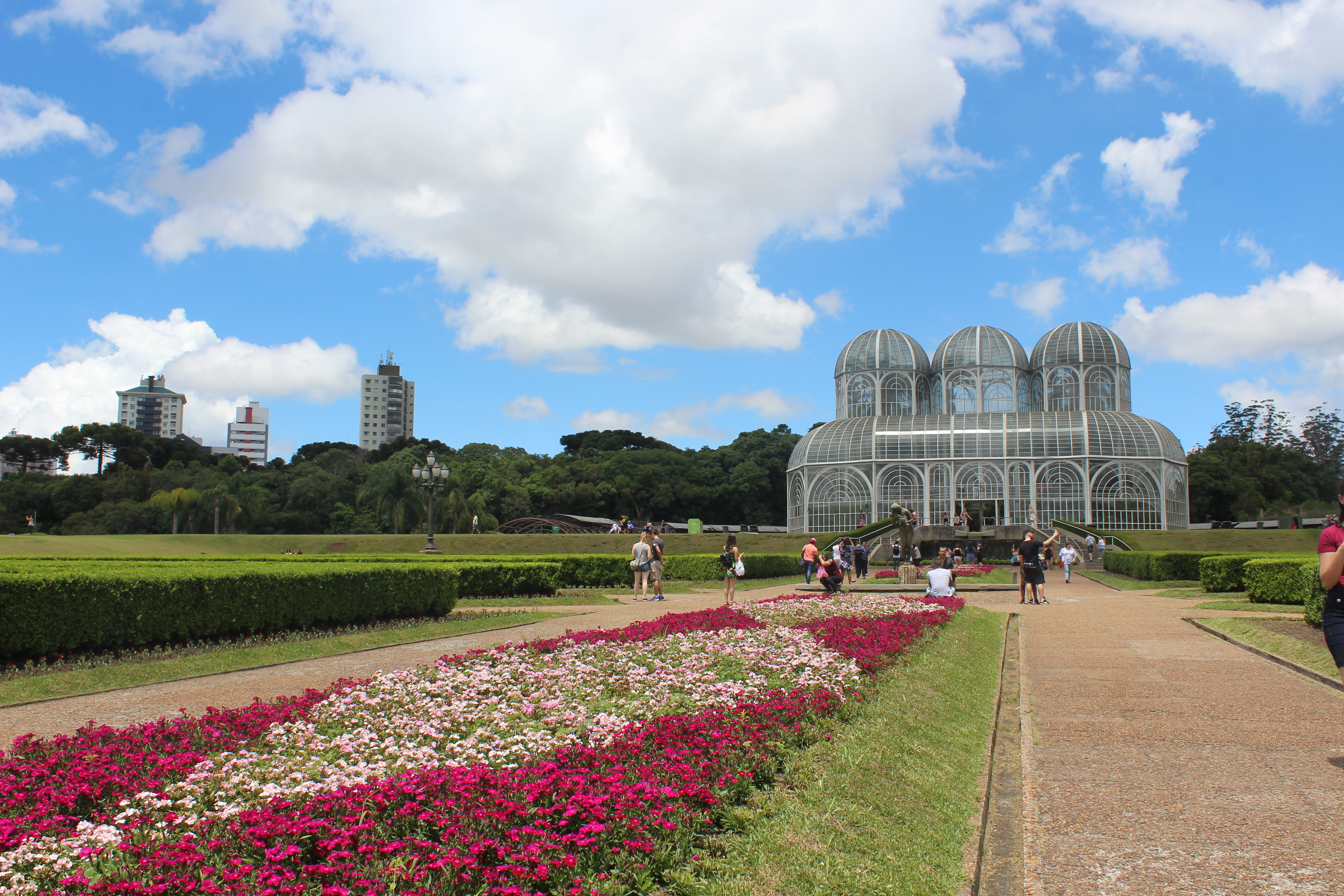
HG: Tell us more about the Polish minority in Brazil. Do they cultivate Polish traditions?
JK: The Polish language of the Polish community in Brazil is quite funny, because it sounds like the one spoken 100 years ago, used by our grandparents, and there are also some polonized Portugueseisms. And this is how young people speak, if they speak Polish at all. Because if someone is learning Polish, they are probably around 50, and they do it only to maintain contact with the language, but not necessarily to learn. This was also quite annoying as it is not easy to conduct classes with someone who is not motivated to study at home and only benefits from classes that are held once a week.
We also had a few presentations. We organized a screening of the film "Ida", a discussion about it, as well as a meeting about the Polish education system. When it comes to young people, many dream of living in Europe. I think it was useful for them, because if they have Polish roots, they can apply for the Pole's Card.
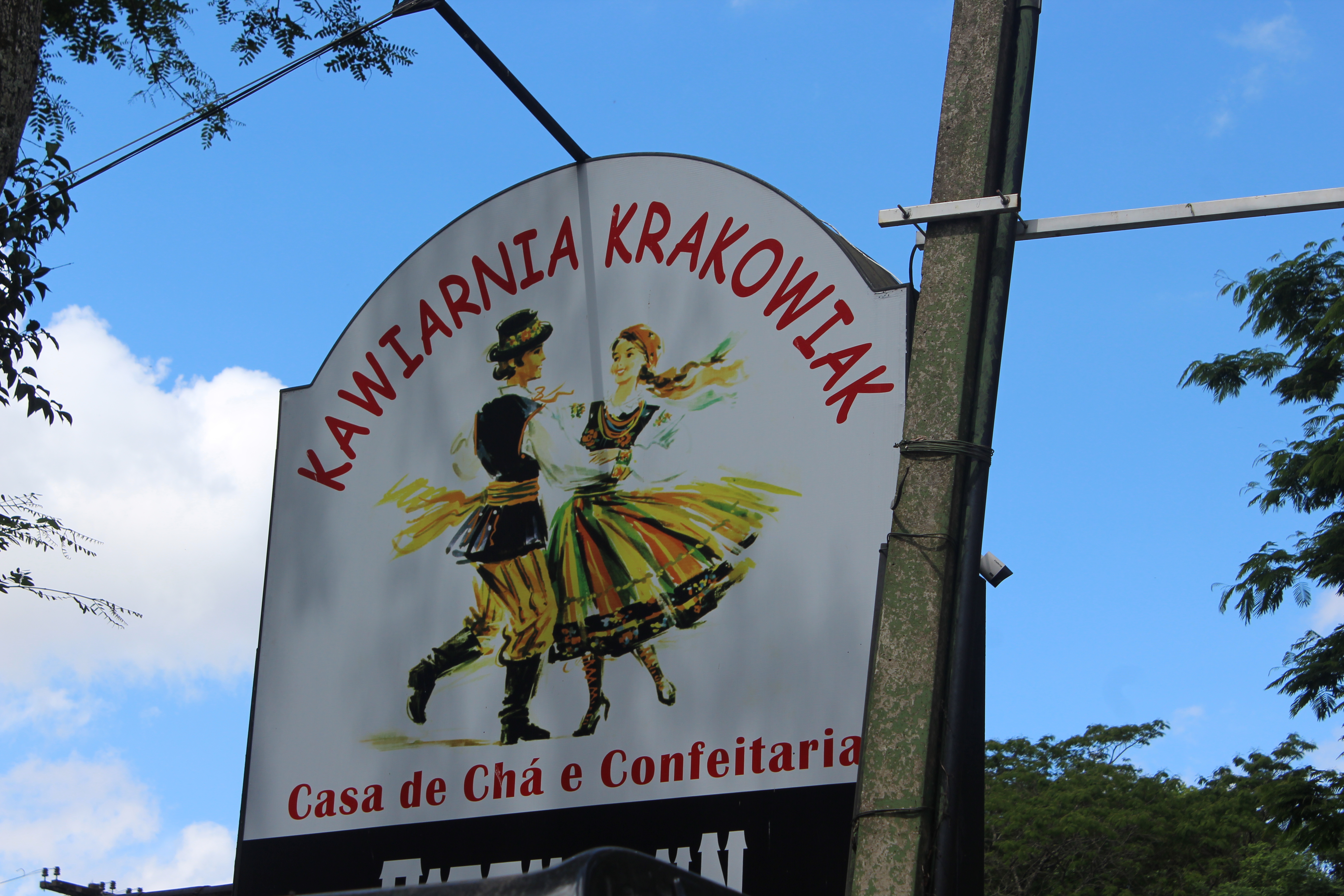
In general, Polishness is visible there in many places. From Polish names on signboards to food in supermarkets like "pierogue". Although the dumplings I ate there were not very good. They supposedly have the equivalent of Polish cottage cheese, requeijão, but it's not the same. We were also on a road trip around small villages in the state of Paraná. We visited Poles who were very open and welcomed us with Polish-Brazilian food.
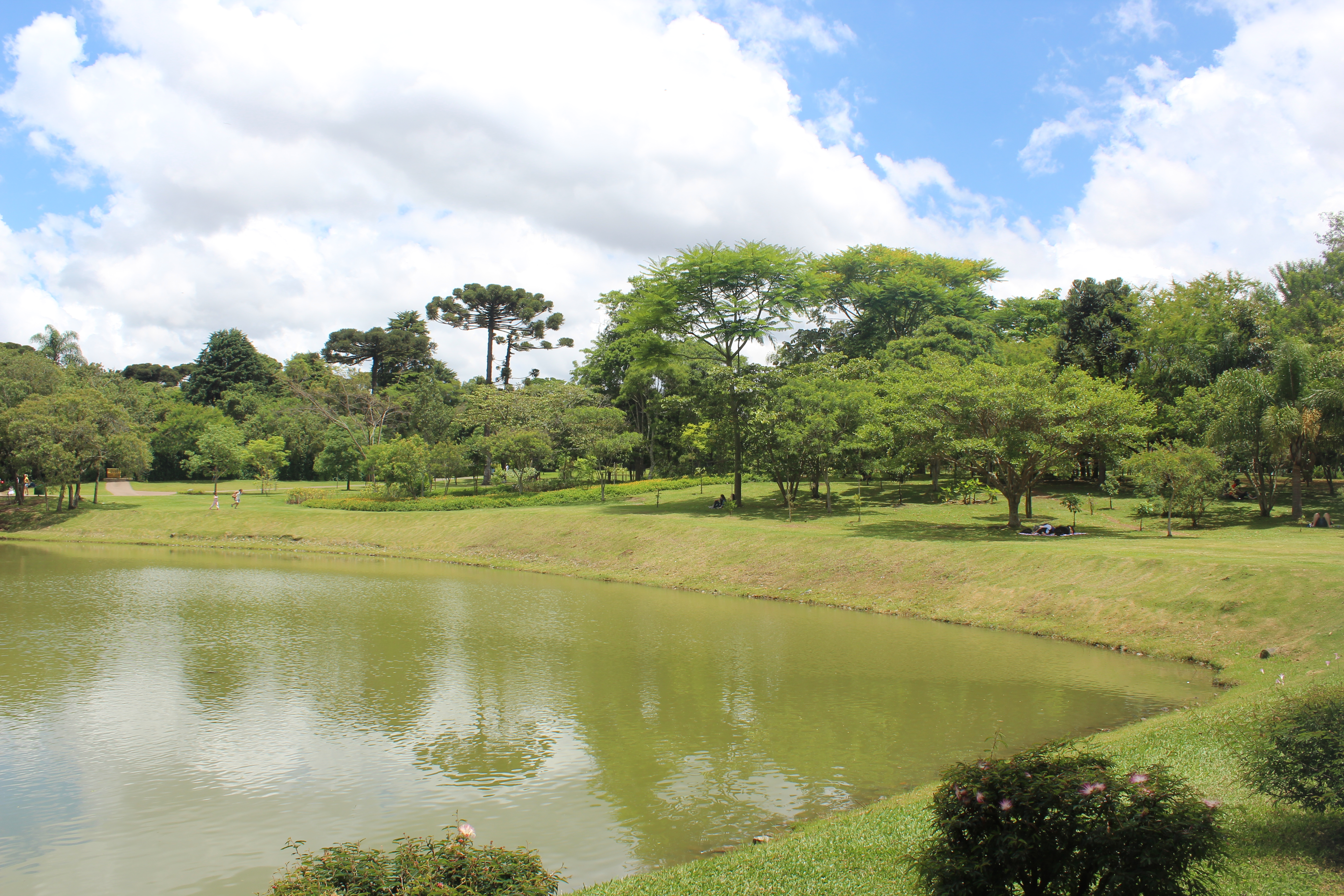
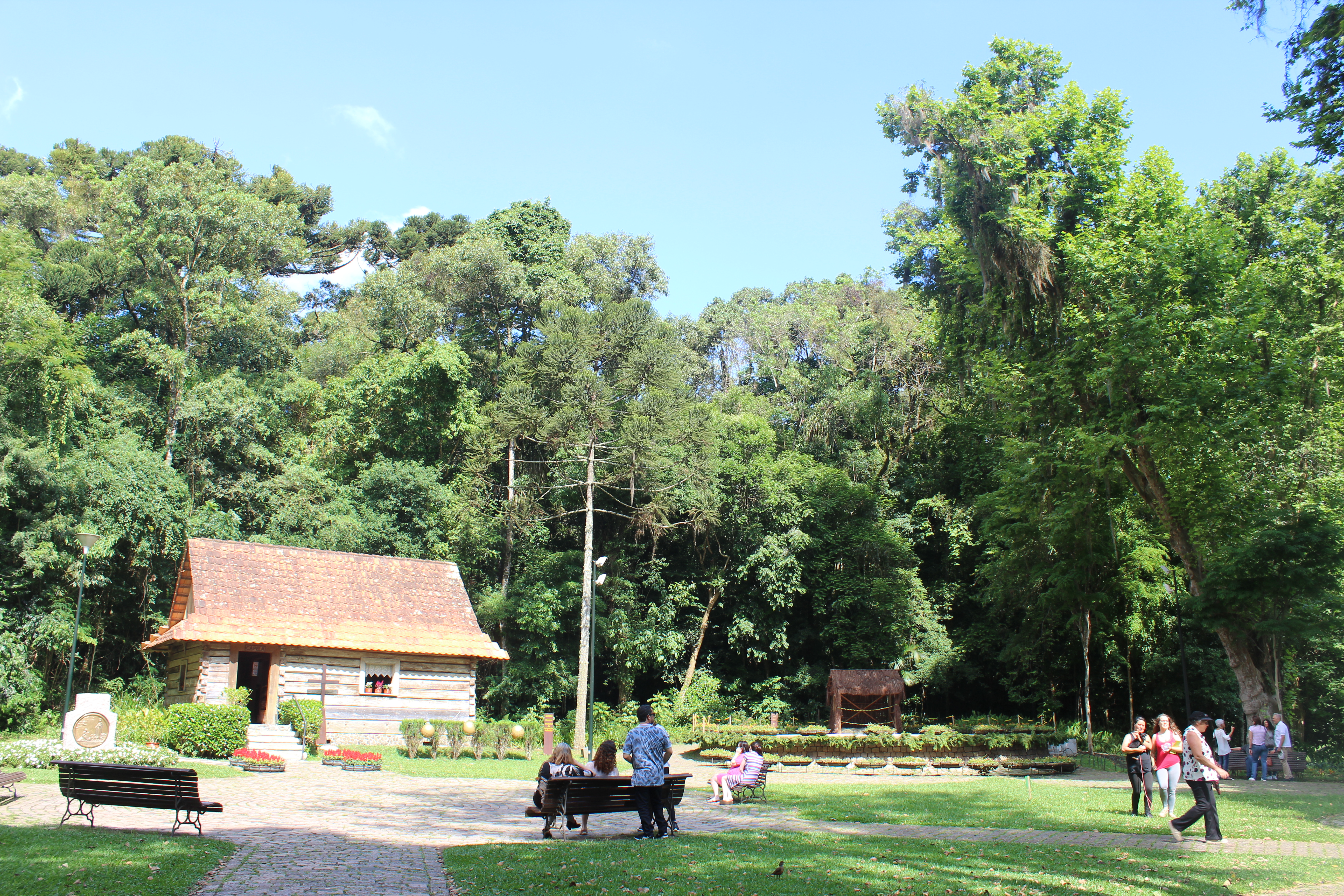
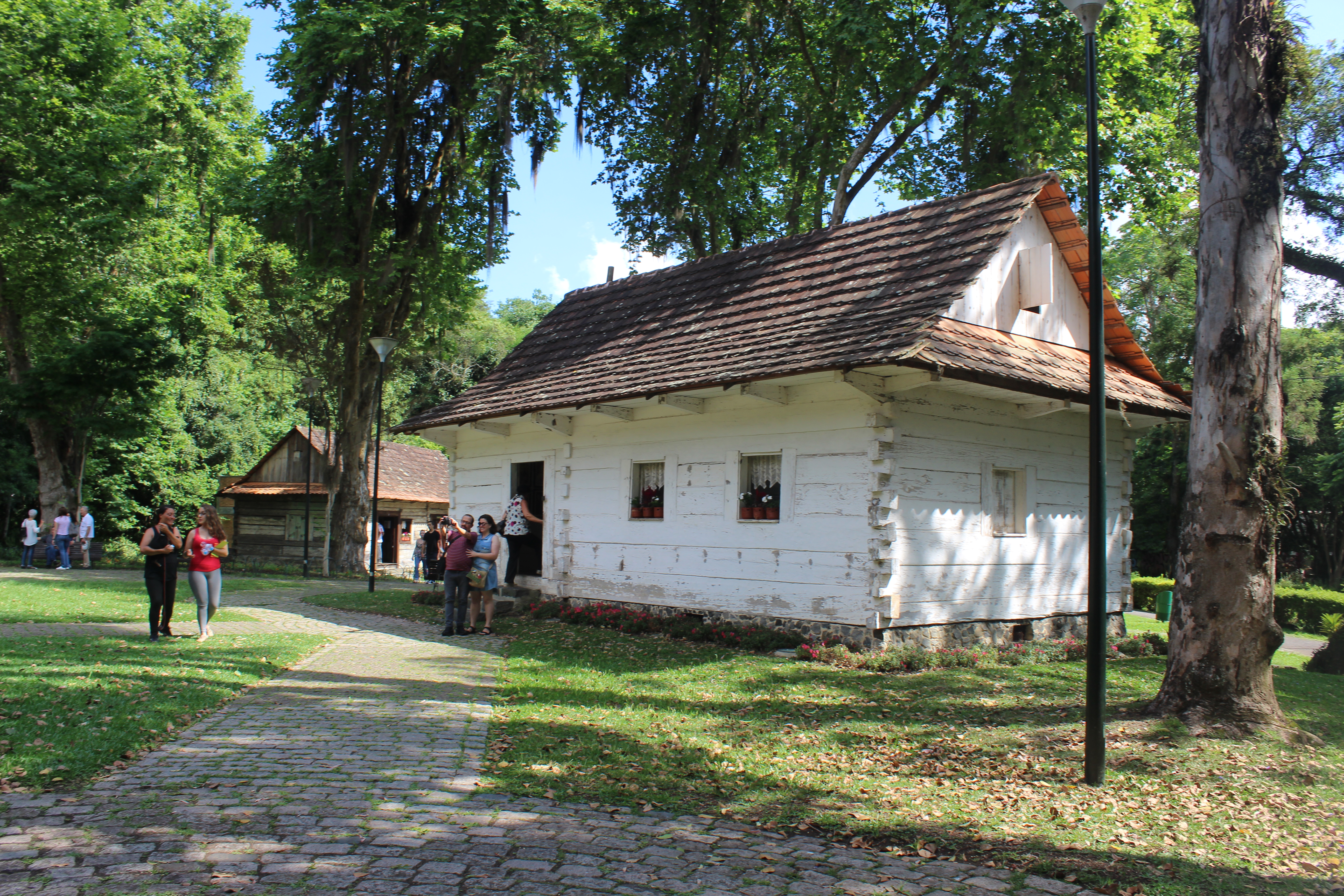
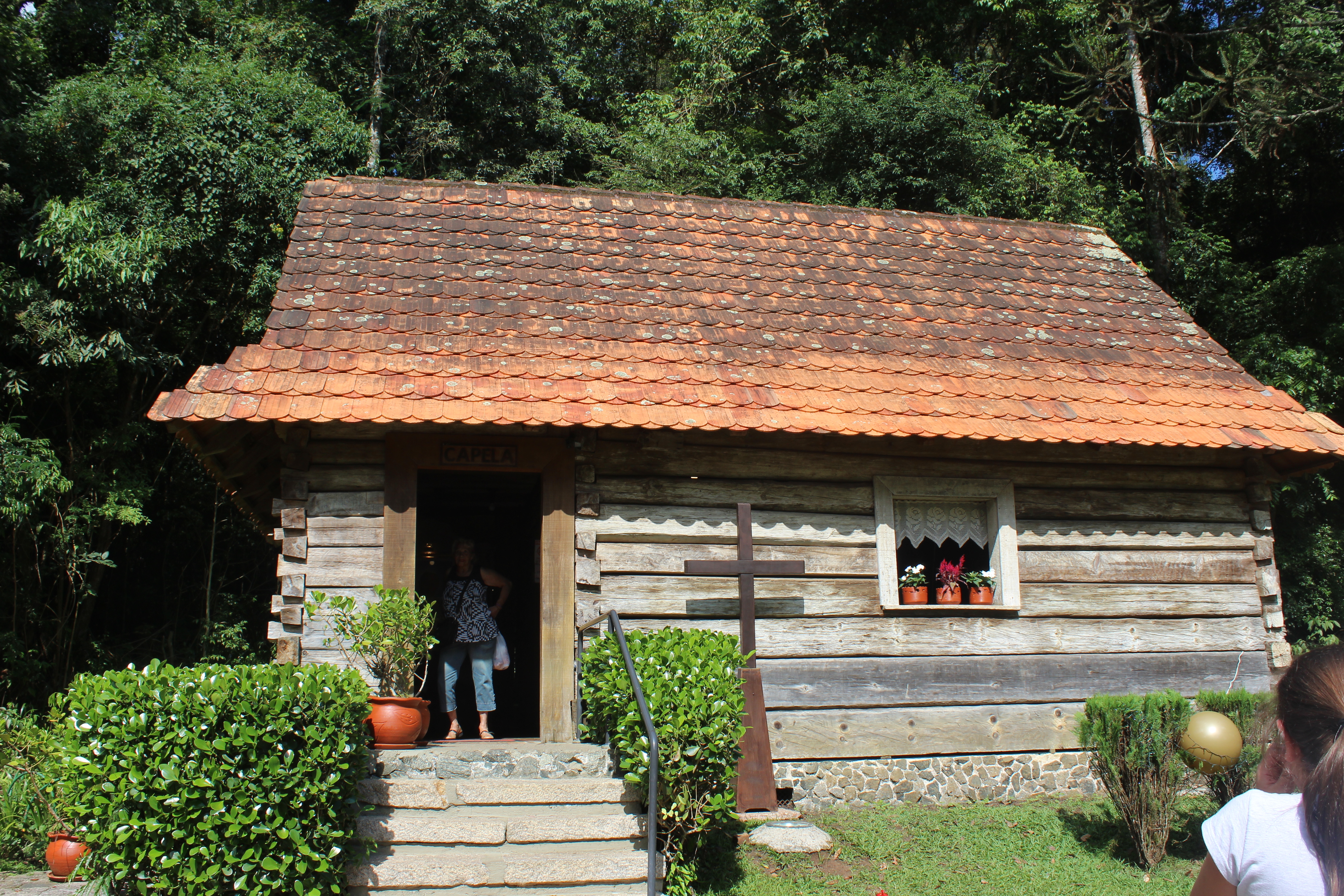
In Curitiba, however, there is the John Paul II Park, in which there are original houses, built by the first Polish settlers, moved from nearby towns.
JK: The Polish language of the Polish community in Brazil is quite funny, because it sounds like the one spoken 100 years ago, used by our grandparents, and there are also some polonized Portugueseisms. And this is how young people speak, if they speak Polish at all. Because if someone is learning Polish, they are probably around 50, and they do it only to maintain contact with the language, but not necessarily to learn. This was also quite annoying as it is not easy to conduct classes with someone who is not motivated to study at home and only benefits from classes that are held once a week.
We also had a few presentations. We organized a screening of the film "Ida", a discussion about it, as well as a meeting about the Polish education system. When it comes to young people, many dream of living in Europe. I think it was useful for them, because if they have Polish roots, they can apply for the Pole's Card.
In general, Polishness is visible there in many places. From Polish names on signboards to food in supermarkets like "pierogue". Although the dumplings I ate there were not very good. They supposedly have the equivalent of Polish cottage cheese, requeijão, but it's not the same. We were also on a road trip around small villages in the state of Paraná. We visited Poles who were very open and welcomed us with Polish-Brazilian food.
In Curitiba, however, there is the John Paul II Park, in which there are original houses, built by the first Polish settlers, moved from nearby towns.

HG: What's the weirdest food you've eaten in Brazil?
JK: "Feijoada". This is a stew with meat and beans that is served with rice. It's more like leftover meat, e.g. pork ears. The dish itself wasn't strange, because I knew it before, but strange was the fact that it was eaten with orange.
There was also "sagu". It's a dessert made of tapioca balls. Some of the balls are stained white, and some are soaked in wine, which gives a characteristic pink color.
HG: How does it taste?
JK: I can't describe it, but it has an interesting texture.
JK: "Feijoada". This is a stew with meat and beans that is served with rice. It's more like leftover meat, e.g. pork ears. The dish itself wasn't strange, because I knew it before, but strange was the fact that it was eaten with orange.
There was also "sagu". It's a dessert made of tapioca balls. Some of the balls are stained white, and some are soaked in wine, which gives a characteristic pink color.
HG: How does it taste?
JK: I can't describe it, but it has an interesting texture.


HG: How was your second trip to Brazil?
JK: I went there for a student exchange in the second year of my master's degree, for the summer semester. I didn't have any scholarship, so I had to save up money. Unfortunately, after a month and a half, I had to come back due to the coronavirus.
HG: Where did you live?
JK: In São Paulo. I studied at the Universidade de São Paulo, the best university in South America according to many rankings.
HG: How did the Brazilians deal with the coronavirus?
JK: It's hard to say because I was there at the start of the pandemic, so nobody cared too much. Until restrictions were put in place, everything was normal. Although in mid-March it was already hard to buy masks and street vendors were selling disinfectants on the streets. I lived in a dormitory where a nurse also lived, so she kept telling us what it was like in the hospital, if there was a lot of occupancy, etc. The Brazilians then thought that they were dealing with many tropical diseases such as yellow fever and dengue, so they thought they were prepared and used to this type of situation. They believed they could handle it. There were also theories that in countries with a warm climate, the virus spread less.
HG: São Paulo is the largest city in Brazil. How was it to live in such a big city?
JK: My first impression was terrible, because I was driving from the airport for three hours and I paid 160 reais for the Uber trip (then around 140 zlotys). Many times when I looked at the map, I thought the place was close to me, but it turned out to be an hour away, especially when I wanted to get somewhere where the metro doesn't reach.
HG: Weren't you afraid to go and live there alone?
JK: I actually wasn't alone there. I was flying alone, but my two Polish friends were already there. In Lisbon, I also met one Brazilian who lived in São Paulo. In addition, iFriend, which is a buddy / mentor system, works well at the university. I had three, so I had someone to go out with. Since this was my second visit to Brazil, I knew what to avoid. I traveled mainly with Uber which is quite safe and cheap means of transport. I took additional, old phone with me, but as soon as I felt more confident, I started using a newer one, because the phone didn't have a camera. If basic precautions are followed, everything is okay.
JK: I went there for a student exchange in the second year of my master's degree, for the summer semester. I didn't have any scholarship, so I had to save up money. Unfortunately, after a month and a half, I had to come back due to the coronavirus.
HG: Where did you live?
JK: In São Paulo. I studied at the Universidade de São Paulo, the best university in South America according to many rankings.
HG: How did the Brazilians deal with the coronavirus?
JK: It's hard to say because I was there at the start of the pandemic, so nobody cared too much. Until restrictions were put in place, everything was normal. Although in mid-March it was already hard to buy masks and street vendors were selling disinfectants on the streets. I lived in a dormitory where a nurse also lived, so she kept telling us what it was like in the hospital, if there was a lot of occupancy, etc. The Brazilians then thought that they were dealing with many tropical diseases such as yellow fever and dengue, so they thought they were prepared and used to this type of situation. They believed they could handle it. There were also theories that in countries with a warm climate, the virus spread less.
HG: São Paulo is the largest city in Brazil. How was it to live in such a big city?
JK: My first impression was terrible, because I was driving from the airport for three hours and I paid 160 reais for the Uber trip (then around 140 zlotys). Many times when I looked at the map, I thought the place was close to me, but it turned out to be an hour away, especially when I wanted to get somewhere where the metro doesn't reach.
HG: Weren't you afraid to go and live there alone?
JK: I actually wasn't alone there. I was flying alone, but my two Polish friends were already there. In Lisbon, I also met one Brazilian who lived in São Paulo. In addition, iFriend, which is a buddy / mentor system, works well at the university. I had three, so I had someone to go out with. Since this was my second visit to Brazil, I knew what to avoid. I traveled mainly with Uber which is quite safe and cheap means of transport. I took additional, old phone with me, but as soon as I felt more confident, I started using a newer one, because the phone didn't have a camera. If basic precautions are followed, everything is okay.


HG: Did you take part in the carnival?
JK: Yes, in São Paulo, a little less famous than the one in Rio, but I think that made it also more "Brazilian" because there were less tourists there. There are sambodromes in São Paulo too, and you can also go to a parade. Carnival is something you have to experience, but I would rather not repeat it. Carnival, apart from the parade, consists of the so-called "bloquinhos". In each city, there are several or several dozen "bloquinhos" daily on various topics, like music, etc., and you can choose the one that interests you the most.
For example, I was in the Ilú Oba de Min block, supposedly the oldest Afro-Brazilian bloquinho in São Paulo. Bloquinho means that people gather in a given place, there is a trio elétrico, that is, a truck equipped with an appropriate sound system, from which music is playing (often live) and people follow the truck, singing, dancing, drinking, etc. Everyone has to be careful not to get robbed and not to get lost in the crowd.
While this Afro-Brazilian block was interesting, because it was a kind of show, the blocks where they played ordinary music from the car a kilometer in front of you and you couldn't hear it very well, it wasn't for me. There are so many people around that it's very easy to panic because you know you won't be able to escape, a bit like at a concert. But surely the carnival itself is a fun experience for someone who likes to dress up, because when it comes to creativity, it's a paradise.
JK: Yes, in São Paulo, a little less famous than the one in Rio, but I think that made it also more "Brazilian" because there were less tourists there. There are sambodromes in São Paulo too, and you can also go to a parade. Carnival is something you have to experience, but I would rather not repeat it. Carnival, apart from the parade, consists of the so-called "bloquinhos". In each city, there are several or several dozen "bloquinhos" daily on various topics, like music, etc., and you can choose the one that interests you the most.
For example, I was in the Ilú Oba de Min block, supposedly the oldest Afro-Brazilian bloquinho in São Paulo. Bloquinho means that people gather in a given place, there is a trio elétrico, that is, a truck equipped with an appropriate sound system, from which music is playing (often live) and people follow the truck, singing, dancing, drinking, etc. Everyone has to be careful not to get robbed and not to get lost in the crowd.
While this Afro-Brazilian block was interesting, because it was a kind of show, the blocks where they played ordinary music from the car a kilometer in front of you and you couldn't hear it very well, it wasn't for me. There are so many people around that it's very easy to panic because you know you won't be able to escape, a bit like at a concert. But surely the carnival itself is a fun experience for someone who likes to dress up, because when it comes to creativity, it's a paradise.
HG: What would you recommend to visit in Brazil?
JK: I have a very long list of things that I have not seen yet, but Rio de Janeiro is a must, although it may be cliché, it is worth admiring especially from the mountain. Besides, of course, the Iguaçu Falls, both on the Argentine and Brazilian sides, are breathtaking. São Paulo will also be a slightly less obvious choice, especially for lovers of architecture and cultural events.
JK: I have a very long list of things that I have not seen yet, but Rio de Janeiro is a must, although it may be cliché, it is worth admiring especially from the mountain. Besides, of course, the Iguaçu Falls, both on the Argentine and Brazilian sides, are breathtaking. São Paulo will also be a slightly less obvious choice, especially for lovers of architecture and cultural events.


HG: What are your plans for the future? would you like to live in Brazil?
JK: I would like to continue my work as a Portuguese language teacher and translator, as well as develop an Instagram account about Brazil @brazyliszek, to which I invite you.
I've always wanted to live in Brazil longer, i.e. 1-2 years. I was hoping that I would be able to do it when I went there to study, but unfortunately… the coronavirus disrupted my plans. I want to go back as soon as the pandemic calms down a bit.
HG: We keep our fingers crossed for you to succeed. Thank you for the conversation.
JK: Thanks!
JK: I would like to continue my work as a Portuguese language teacher and translator, as well as develop an Instagram account about Brazil @brazyliszek, to which I invite you.
I've always wanted to live in Brazil longer, i.e. 1-2 years. I was hoping that I would be able to do it when I went there to study, but unfortunately… the coronavirus disrupted my plans. I want to go back as soon as the pandemic calms down a bit.
HG: We keep our fingers crossed for you to succeed. Thank you for the conversation.
JK: Thanks!
